Your Holiday Illness Playbook: A Pediatrician’s Guide to Thanksgiving Week
A practical guide for navigating fevers, coughs, rashes, stomach flu, and last-minute symptoms
If your child gets sick this week, you are not alone!
It never fails. It is like an unwritten rule of having young children. Somehow their internal clocks always choose a holiday to get sick.
But, you deserve to enjoy the holiday and feel confident navigating whatever shows up on your doorstep.
So here it is…your Holiday Illness Playbook.
Why Kids Get Sick More This Week
This time of year is really a perfect storm.
Illness Exposures Skyrocket
Kids from different schools, different states, different daycare rooms suddenly find themselves altogether in one place…your holiday family gathering. And, you are usually spending hours together in close contact. Viruses live for this moment.
Travel and Change of Routine Disrupt Immunity
Let’s face it: routines become optional this time of year. Late nights become the norm. Skipped naps make an appearance. Fruits and vegetables? Probably not as much! And not to mention drier air in airplanes and hotels irritating the airways. All of these things can affect the immune system, causing it not to work at peak capacity.
Thanksgiving Sits at the Start of a Heavy Virus Wave
This is the time of year when the illness season really starts to pick up. Cooler weather moves everyone indoors. Flu picks up. RSV circulates. Colds are everywhere. And let’s not even talk about the stomach flu (ewww). And some years we are lucky enough that hand, foot, and mouth is still sticking around. Lucky us!
Emotional Overload Makes Everything Worse
This time of year is really magical for children. However, all that excitement, lack of sleep, and overstimulation leads to easier meltdowns. And, when you are already spent, a sore throat feels SO much worse.
None of this means that your child is destined to get sick. But if something pops up, know it’s very normal.
Can We Still Go to Thanksgiving?
This is one of the top questions I get this week.
Here’s the breakdown:
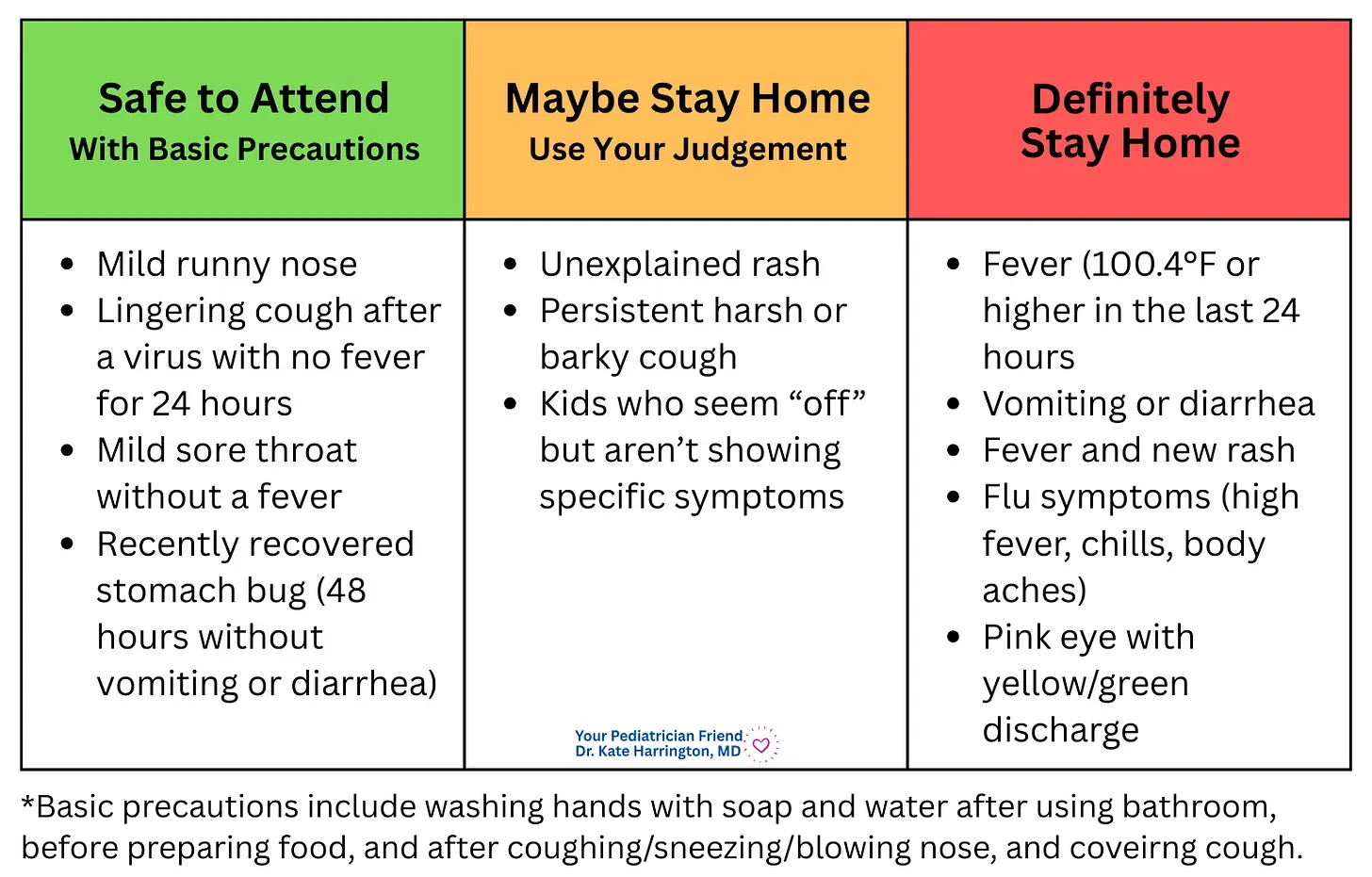
As with most things in life, there are a lot of gray areas. If you have a newborn, or a holiday guest is medically fragile, the guidelines will be stricter. It’s appropriate to inform others of symptoms.
As always, it is okay to make the call that feels the best for your unique family.
Holiday Guide for Common Symptoms
Here’s how to think through the most common Thanksgiving-week symptoms.
Fever
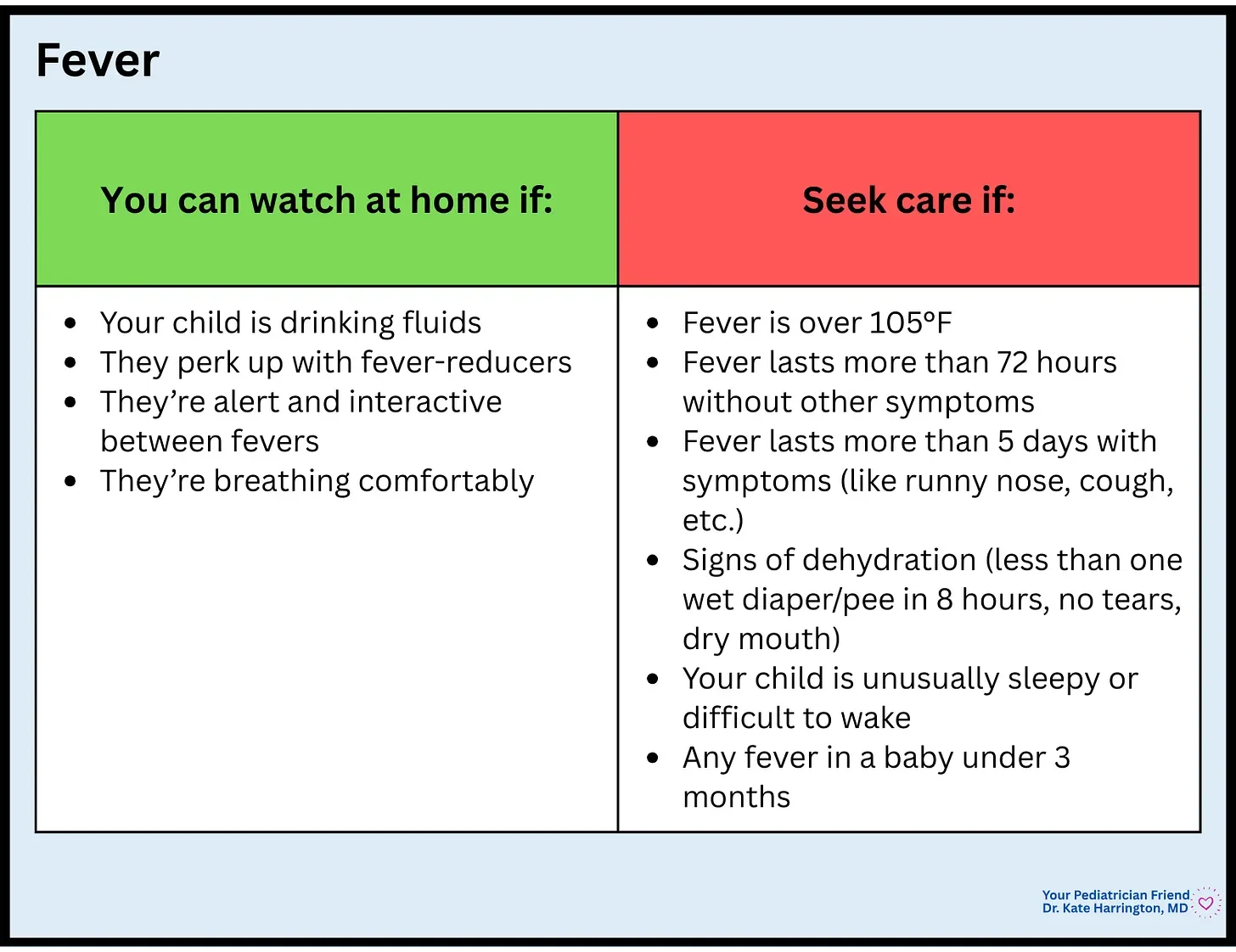
Helpful reminders:
Fever spikes at night are normal due to circadian rhythms
It’s okay if they don’t eat much—hydration matters most.
You don’t always have to treat a fever. Treat the symptoms, and give medicine if they are uncomfortable.
Cough
Coughing almost always gets worse at night. Blame gravity and normal body physiology! This is normal and expected, and rarely a sign of something more dangerous.
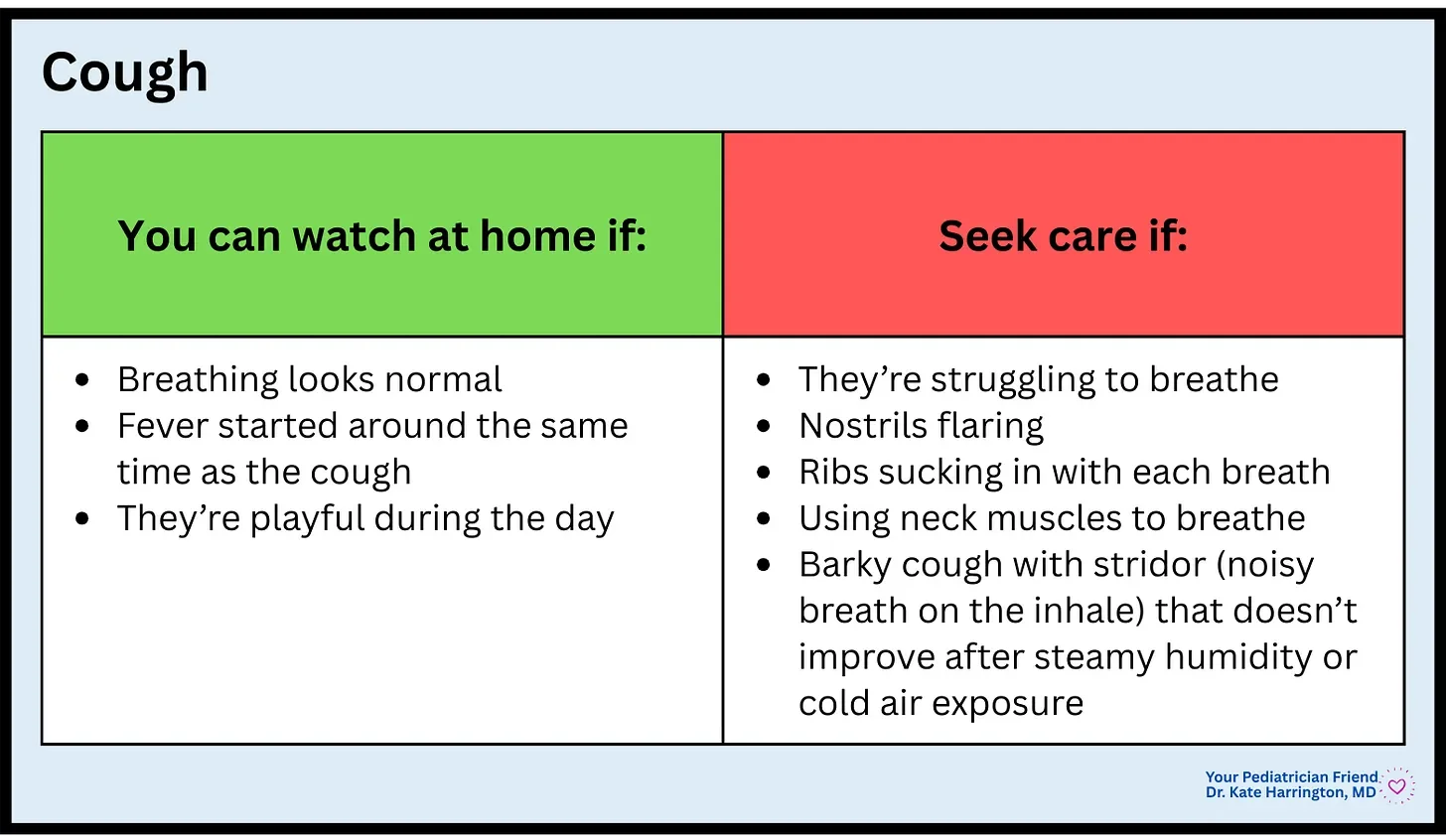
If your child is breathing comfortably, is playful between coughs, and the cough is worse at night, this is typical!
🩺 Pediatrician’s Insight: Dry air on airplanes and in hotels can trigger coughs. Bring saline spray and encourage plenty of water before and during travel.
Sore Throat
Almost all sore throats are viral, but the big question is always, “Is is strep?”
Think about strep if:
Sudden onset of sore throat accompanied with a fever
Cold symptoms (like runny nose and cough) are absent
Swollen, tender glands on the front of the neck
Tiny red dots on the roof of the mouth (palatal petechiae)
“Strawberry”ongue (red and bumpy)
Sandpaper-like rash
🩺 Pediatrician's Insight: If symptoms are mild and improve with fever-reducers, it is okay to wait 24 hours to bring them in. So, you don't need to scramble to find somewhere that is open on Thanksgiving day.
Rashes
People tend to panic with rashes. But you don’t have to! Most are benign. Here’s how to distinguish some typical childhood rashes:
Hand, foot, and mouth
Small red bumps and blisters on hands, feet, and around the mouth. Diaper area is also common.
Often associated with a fever and a sore mouth (increased drooling is often your sign in a young child)
Very contagious early on in the illness; this would be a stay-home situation
Fifth Disease
Red, “slapped cheek” look
Lace-like rash on arms
Usually mild, and a child is no longer contagious once the rash appears
Viral Exanthems
Pink, flat rash that shows up right as fever is breaking or shortly thereafter
Usually not itchy
Common and does not need treatment
As long as child has been fever-free for 24 hours, okay to be around others
Hives
Raised, red, itchy bumps
Can be triggered by allergies, heat/cold, viruses, and unknown causes (our favorite cause…ugh)
Usually harmless, unless accompanied by swelling or breathing issues
An immune response to something happening, and not contagious
🩺 Pediatrician's Insight: Rashes look scarier under yellow indoor lighting. Natural light helps you see things a bit clearer.
Stomach Bugs
Stomach bugs are probably the most unwelcome of the holiday viruses. But that doesn’t keep them from being the unofficial mascot. Totally miserable, but common.
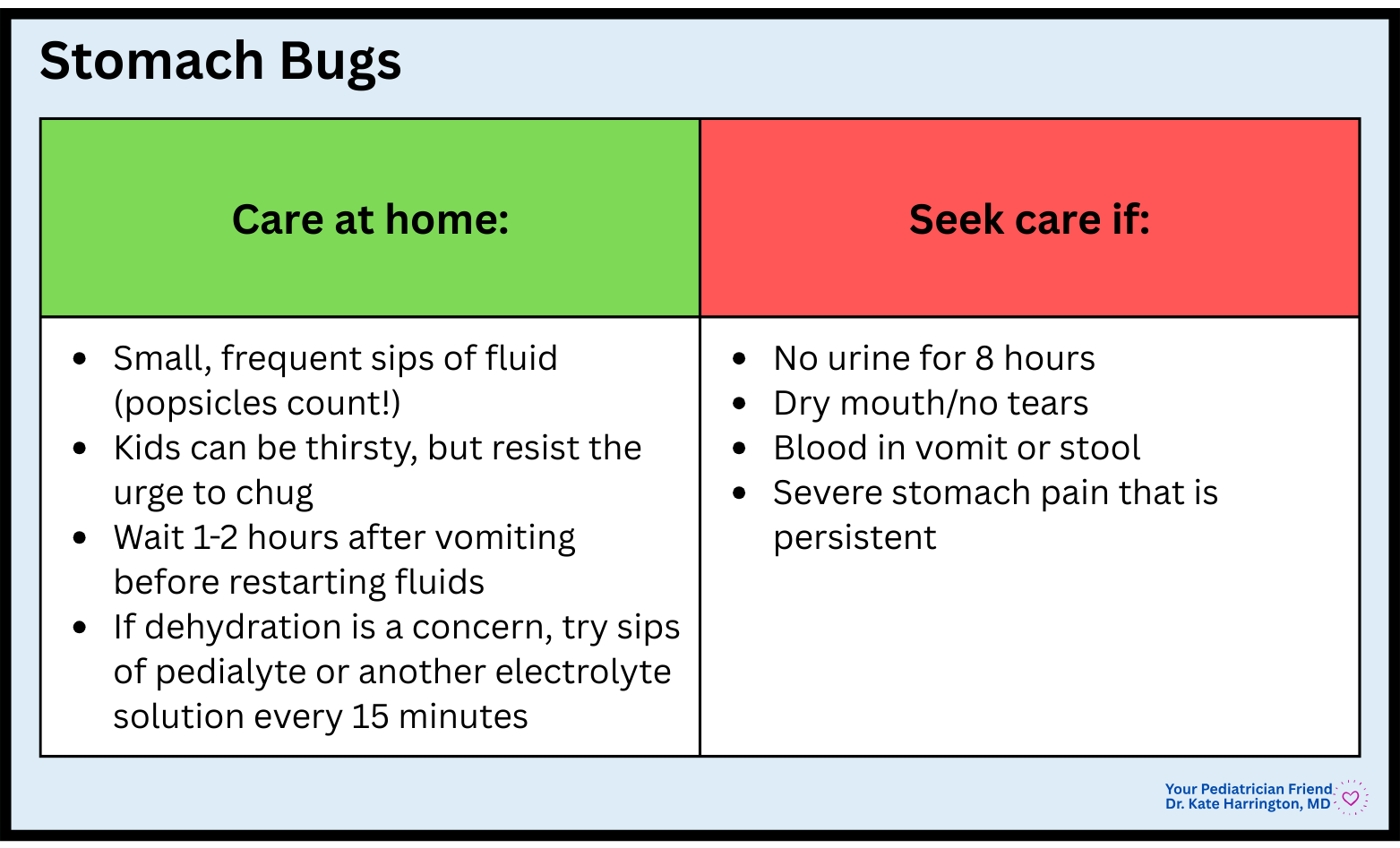
💡Fun Fact: A fast way to check dehydration is capillary refill. Gently pinch the fingertip, and see how quickly the color returns. If it takes more than 2 seconds, this is another sign of dehydration.
🩺 Pediatrician’s Insight: Most stomach bugs last 24-48 hours. If symptoms last longer than two days, it is less likely a “classic” viral gastroenteritis.
Travel Issues
Ear pain on planes
Encourage your child to suck and swallow (water, snack, pacifier)
Offer a dose of pain reliever if it is really bothersome
Text within this block will maintain its original spacing when published
🩺Pediatrician's Insight: If your child has recurrent issues with ear pain on a plane, it is okay to offer a pain reliever before landing.
Motion Sickness Remedies
Fresh air—open that window a bit!
Ginger chews
Have your child look at the horizon
Acupressure bands (sea bands)
Dramamine (over age 2) and Bonine (over age 12) are medicine options if above doesn’t work
Your Holiday Medication & Supplies Checklist
Here’s what I would include:
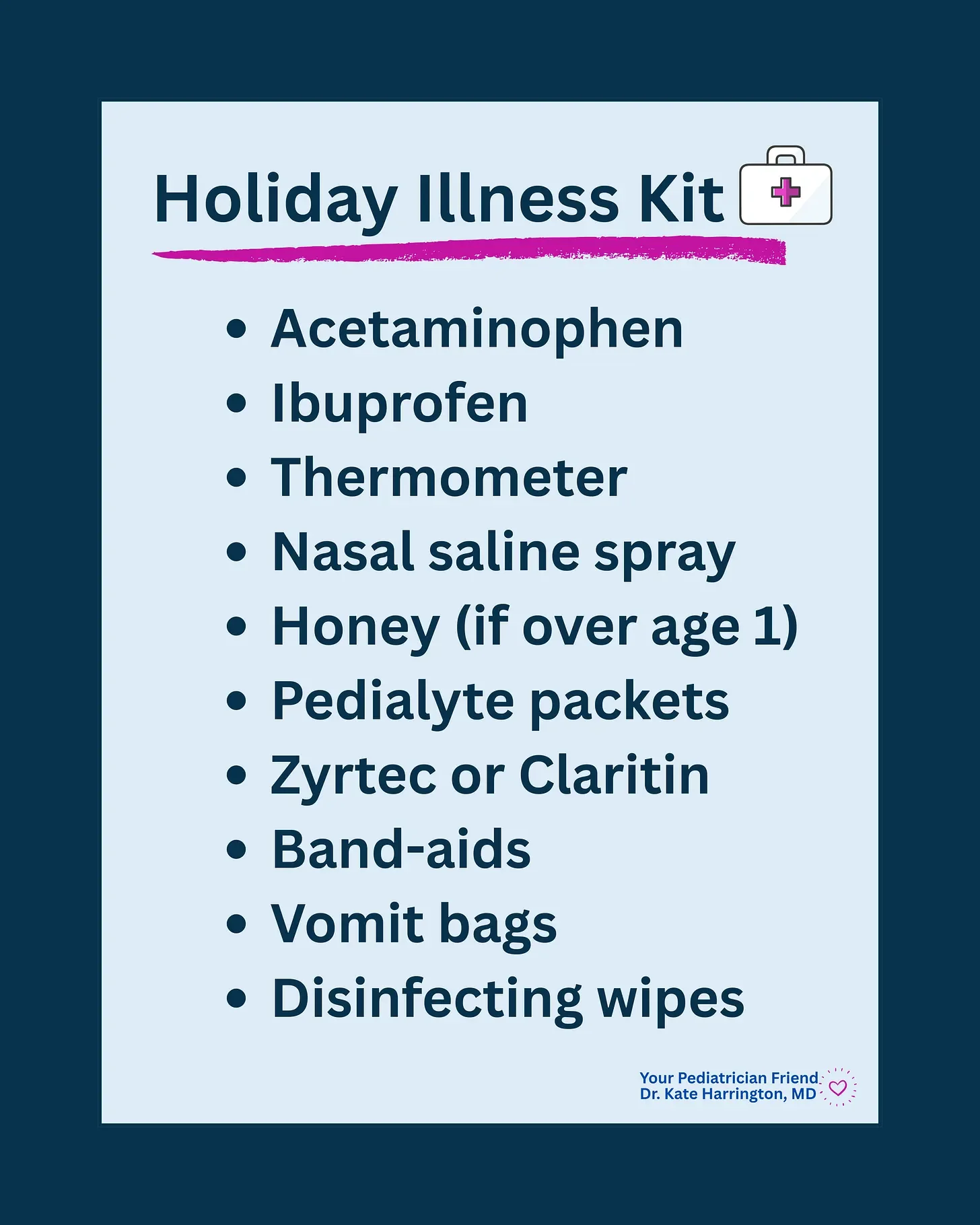
🩺 Pediatrician’s Insight: Prepare a small “illness kit” so you are ready for every trip!
When to Seek Care During the Holiday Weekend
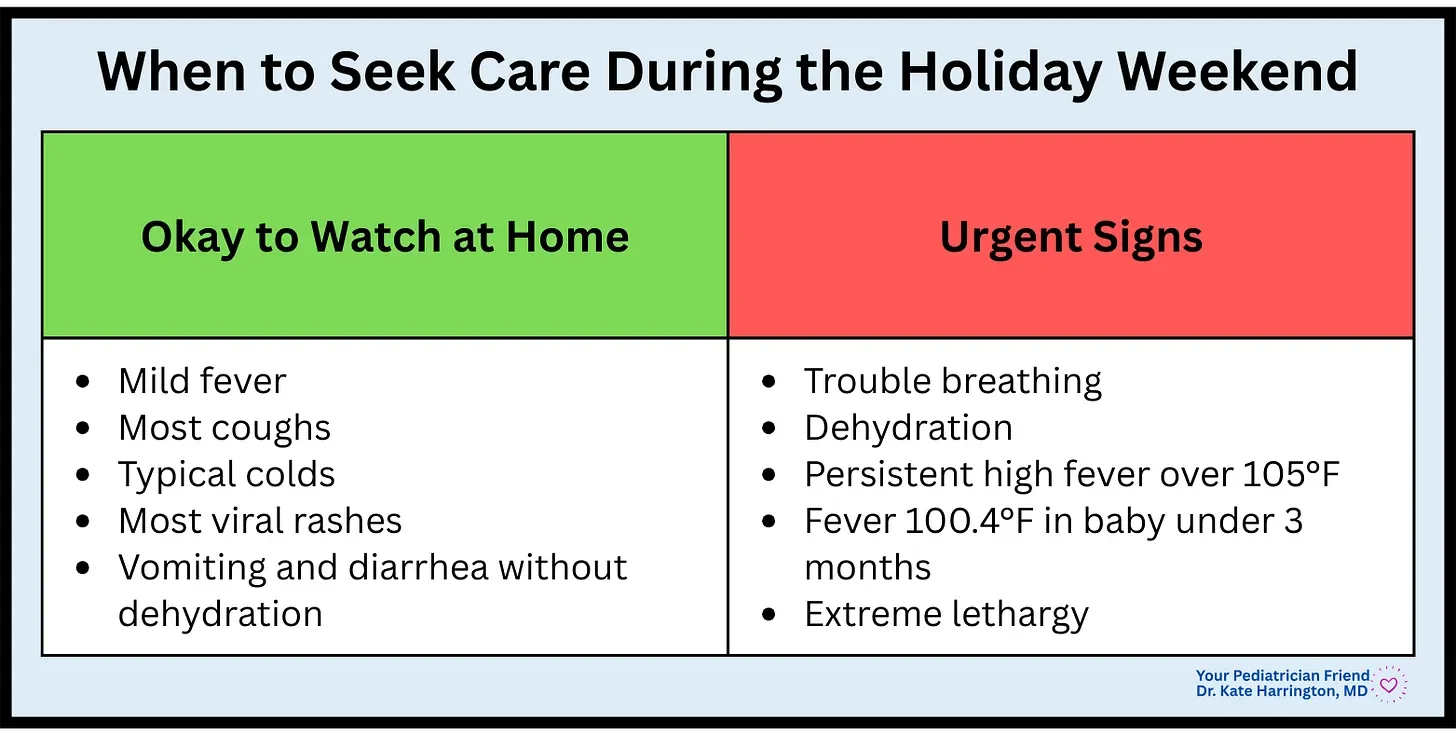
Remember, most Thanksgiving illnesses are uncomfortable but not dangerous!
Staying Grounded When Illness Pops up
A few friendly reminders:
Take a breath before reacting. You will feel better and think more clearly.
Kids bounce back faster than adults expect.
You don’t need to know exactly what is causing the symptoms to support your child.
Symptoms almost always feel worse at night.
Hydration and rest solves most childhood illnesses.
Illness during the holidays is not a parenting failure, it’s just bad luck!
If You Need Support This Week…I’m Here 🩷
Thanksgiving week is one of the busiest weeks of the year for parent questions—fevers spike in the evenings, rashes appear out of nowhere, and symptoms start right as the pediatrician’s office closes. And, unfortunately, this is usually just the beginning of “kid illness season.”
If you want quick reassurance or help sorting through symptoms, my Unlimited Texting Membership is an easy way to get pediatric guidance without booking another appointment. You can send me a text, whenever you need help (yes, even on holidays!).
I’m running a Black Friday Special:
✨ 20% off your first month (just $80) for your whole family.
Enter the code BLACKFRIDAY20 at check out now through Cyber Monday.
Gift memberships also included.
A Thanksgiving Message 🦃
I’m so grateful for this community of thoughtful, caring parents who show up for their kids every single day (even the ones that involve cleaning up puke!).
May your Thanksgiving be filled with gratitude, love, and grace…and may any ill symptoms your kids get be mild and short-lived.
You’ve got this, parents!
But if things get chaotic, know I’m here to help 💕