School or No School…That is the Question!
How to Decide if Your Child is Sick Enough to Stay Home from School
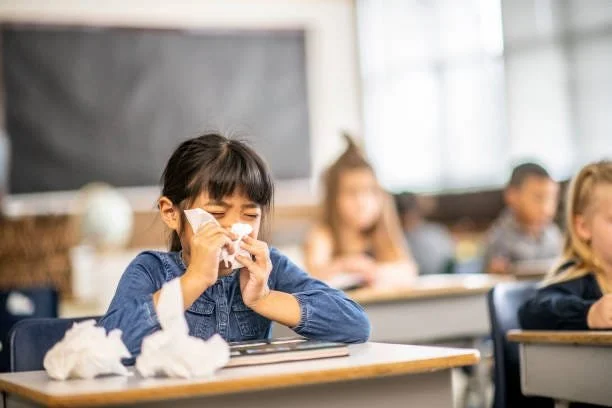
You know that the school year is officially underway when backpacks are overflowing, the calendar is packed…and someone starts sniffling.
Long gone are the lazy summer mornings and lack of structure. Kids are back in classrooms. That first exam is under their belts. They are making new friends on the playground. And, inevitably, they are swapping germs. Aaagh! It’s only a matter of time before that first illness arrives on your doorstep with its snotty attitude and the reality kicks in—welcome to the school year illness season.
When It Hit Our House
Our first bug showed up at our doorstep last week. Both my kids got sick on the same day, and for the first time ever, they both stayed home from school together.
Was it convenient? I guess so. Instead of dragging illness out over a few weeks, we got it all in one fell swoop. Was it as fun as it sounds? Definitely not. It turns out that school germs aren’t as fun as the friends who share them.
So, this brings us to the age-old question:
How do you know when to keep your child home from school?
The Easy Calls
Some symptoms make the decision easy:
Fever. If your child has a fever (which is defined as a temperature over 100.4°F), they need to stay home. And, they should be home until they are fever-free for 24 hours without using medication, like ibuprofen or acetaminophen.
Vomiting. No one wants to go to school if they are puking, and no one wants a puker at school. Keep them home until they haven’t thrown up for 24 hours and are able to eat and drink normally.
Breathing problems. If your child is struggling to breathe they should not be in school (and may need urgent medical attention!). If they have asthma and need frequent treatments, keep them home until their symptoms improve and the medications can be managed at school.
Disruptive coughing. If your child is coughing non-stop and it is starting to drive you crazy, chances are it will also be an issue for their teacher and classmates. And it’s hard to learn if you can’t stop coughing!
Pink eye. If your child has constant green-yellow discharge from their eyes that reappears seconds after wiping AND the white part of the eye is red (like so red you can see it across the room) you would want to keep them home until they have been on pink eye drops for 24 hours.
The Gray Areas
Some symptoms aren’t so clear-cut. So here is how to decide:
Fatigue. Being tired is a normal part of illness. So a little bit of fatigue is no big deal. However, if your child is punky and you don’t think they could participate and pay attention during the school day, then keep them home.
Diarrhea. If your child is having massive amounts of diarrhea or it’s very watery, keep them home! And wait until they haven’t had diarrhea for 24 hours and they are able to eat and drink normally before sending them back (you don’t want to be THAT parent that spreads norovirus through the entire elementary school). That said, diarrhea can linger for days or even weeks—especially in babies. If they are improving, having fewer than 4 diarrheal stools a day, and are otherwise acting fine, they can likely go back to school.
Rashes. Rashes can be tricky, even for pediatricians. But, generally, if a rash is oozing, keep them home. If it’s just itchy and they feel fine, school is okay.
Sore throat. Sore throats are a very common component of a cold. For a lot of children, this will be the first sign that a virus is lurking. So, if they have a mild sore throat, but they can swallow and drink, they are okay to go to school. But if it is paired with a fever, or it is so severe they are having a hard time swallowing, keep them home.
Rough night. Sometimes kids just have a rough night. This can harken an illness, but sometimes it is related to something totally unrelated (like anxiety, insomnia, bad dream, etc.). If your child had a rough night and lost an hour or two of sleep, they can likely power through their day. However, if your child only slept a few hours, they are not going to have a good or productive day at school. So, keep them home to rest.
Pain. Use your judgment here. If your child has pain (like a headache or stomachache) that is distracting and does not respond to ibuprofen or acetaminophen, they’re probably better off at home.
The Ultimate Question
“Is my child well enough to participate in class today?”
If the answer is no—regardless of the exact symptoms—they should stay home.
Not every sniffle means a sick day. If your child just has a mild runny nose, normal energy, and no fever, give them an extra hug and kiss and send them on their way. And remember, the school nurse can help if things go downhill midday.
And like most things in parenting—trust your gut! You know your child best! And if you feel like they will have a better day at home (even if the symptoms are mild), that’s okay too!
Good luck this illness season—you’ve got this!! And stay healthy 💕