College Medical Kit: What to Pack Before Your Child Leaves Home
This post contains affiliate links, which means I may earn a small commission if you purchase through my links, at no extra cost to you. I only share items I think are useful for families.
How are you? If you landed on this page, it means that you are preparing to send your child off to college. Your pride and joy! The child you have had under your wing for 18 years! And now, they are leaving the nest. It is definitely a time of mixed emotions. And one of those prominent emotions is worry. You want them to settle in well, get along with their roommate, love their classes, find a welcoming community, and stay healthy.
Part of staying healthy is having the adequate tools to help them when they are not feeling well. And even though they are now technically old enough to manage their own health, many college students have never had to stand in a pharmacy aisle and figure out what to take for a fever, sore throat, diarrhea, allergies, or heartburn. (And we all know that the pharmacy aisle can be confusing even for adults!)
So before move-in day, I recommend creating a small college medicine kit. And, I think it is most helpful to organize it by symptoms, because many students aren’t familiar with the drug names, and are even less familiar with which medicine should be used.
So don’t just send them with medicine—send them with a plan!
First: a few medication safety reminders
Before we get to the list, a few important things:
Teach your child to always read the active ingredient of a medicine.
I generally recommend avoiding multi-symptom cold medications. They often contain several active ingredients, which makes it easier to accidentally double-dose something like acetaminophen. It is usually clearer and safer to treat the symptom you actually have.
If your child takes prescription medication, make sure they know what over-the-counter medications they should avoid or ask about first. It can be helpful for them to discuss this with their doctor before leaving for school.
The basic shopping list
Here’s the shopping list I’d use as a starting point. You won’t necessarily need every single item. Your student’s health history, allergies, prescriptions, and preferences matter. But this gives you a practical framework to start with.
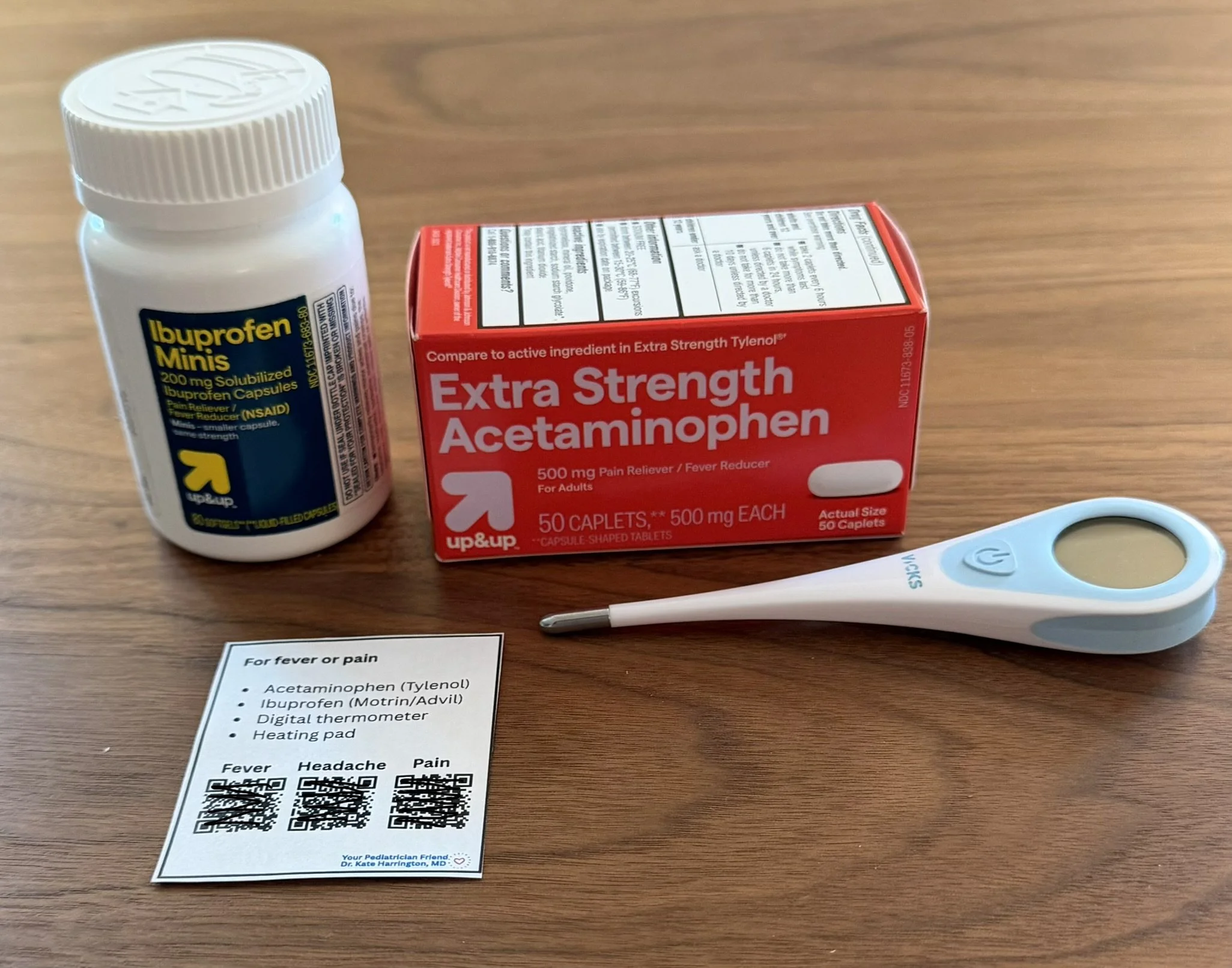
For fever or pain
These are the basics most students will reach for when they have a fever, body aches, headache, sore throat, cramps, or minor injury.
Acetaminophen, (brand name is Tylenol)
Ibuprofen, (brand names are Motrin or Advil)
Digital thermometer (I like a quick read oral thermometer)
Heating pad can be helpful, but old-fashioned “water bottles” are also a great option because you can use them for either heat or ice.
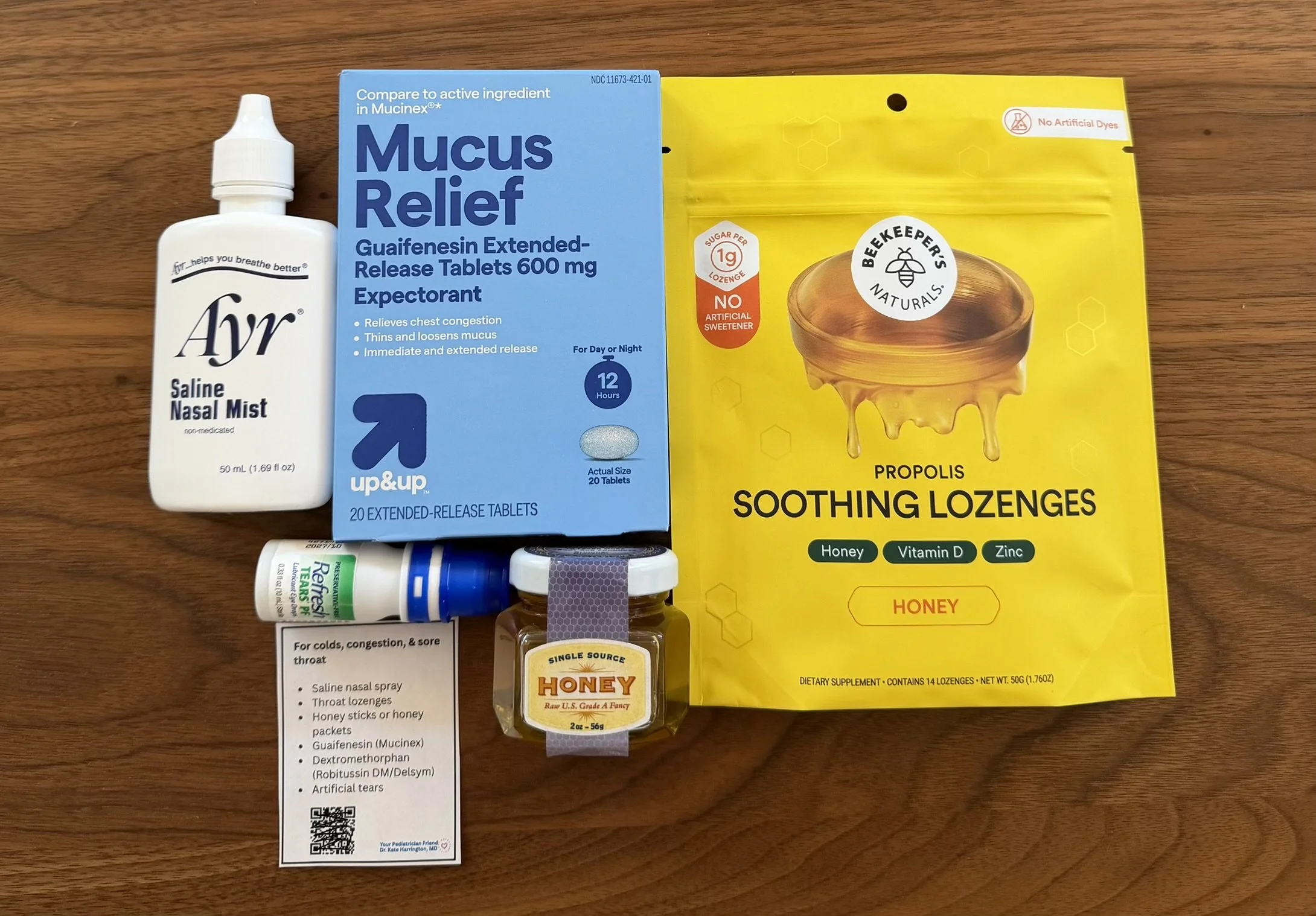
For colds, congestion, coughs, and sore throats
Most college students will get some sort of viral illness during the year. Dorms are a perfect little ecosystem for sharing germs!
Helpful items:
Saline nasal spray for nasal congestion
Throat lozenges for sore throat or coughs
Honey sticks or honey packets for sore throat or coughs
Guaifenesin, such as Mucinex, for chest congestion and cough
Dextromethorphan, such as Robitussin DM or Delsym, for cough (I ONLY recommend using it if they can’t sleep at night and water, honey, etc. don’t help)
Artificial tears can be used for goopy eyes related to colds (if they have redness of the eyeball itself AND goopy discharge, they should be evaluated for possible pinkeye)
**Avoid multi-symptom cold medicines when possible. It is better treat each symptom to avoid double-dosing medications.
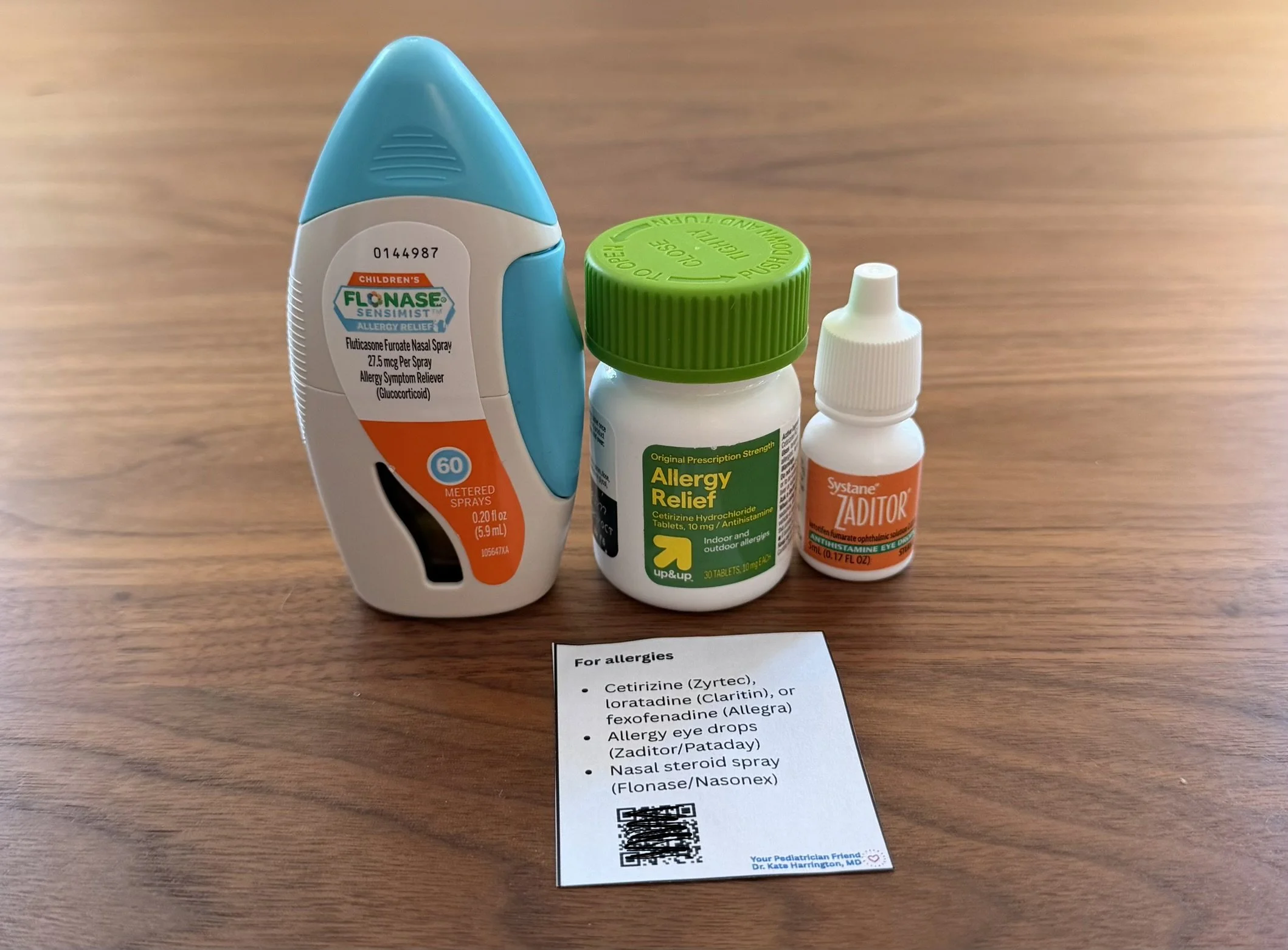
For allergies
Even if your child has never been a huge allergy kid, it is still helpful to have a few basics available. After all it’s a new city with different pollen, a new dorm with inevitable dust, and often old buildings…you never know!
Consider:
Cetirizine (brand name Zyrtec), loratadine (brand name Claritin), or fexofenadine (Allegra)
Nasal steroid spray, such as fluticasone (Flonase) or mometasone (Nasonex), for symptoms that are a bit more severe
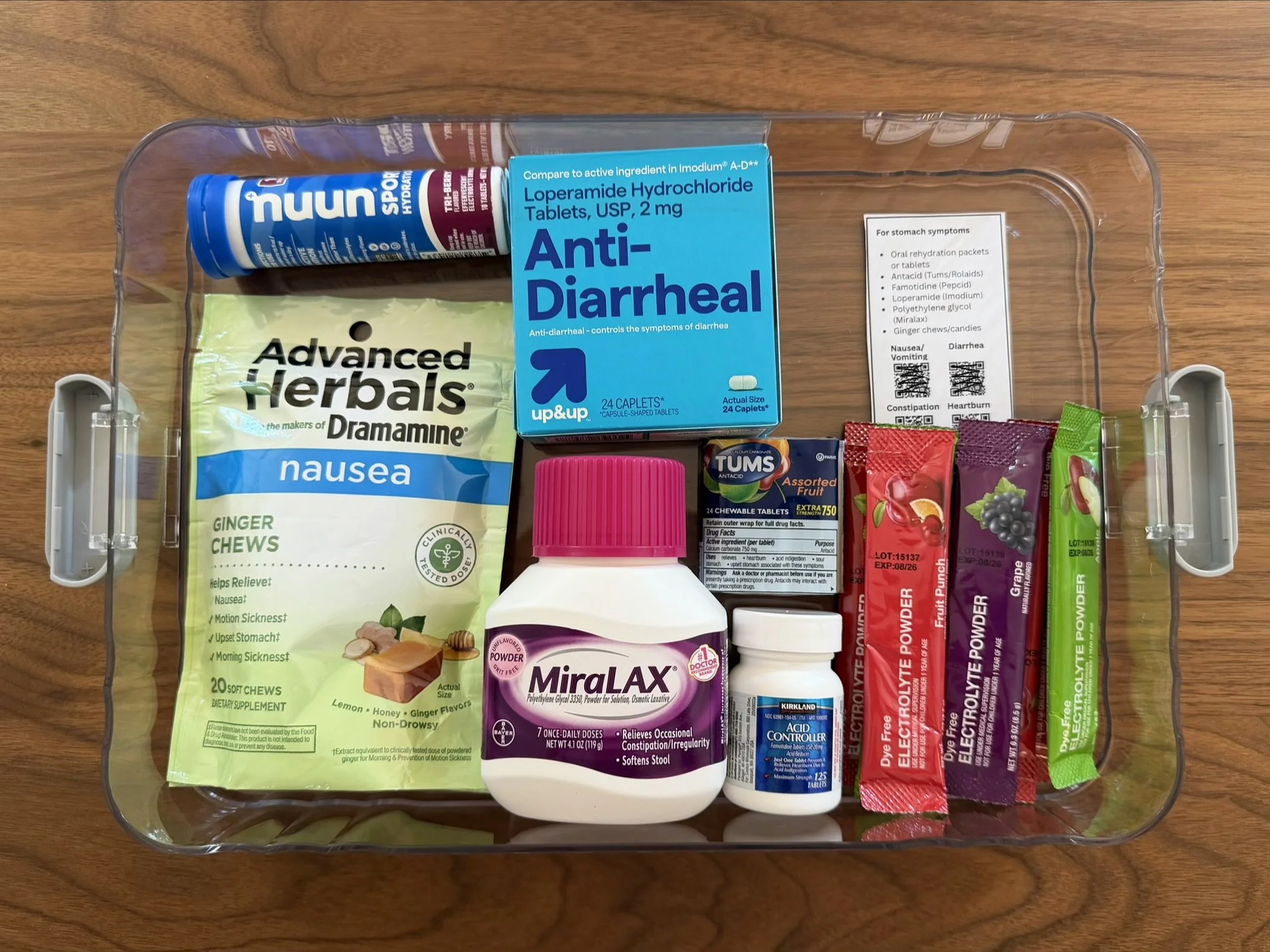
For stomach symptoms
College dining halls, stress, travel, new routines, and shared bathrooms can unfortunately make stomach issues common, especially at the beginning of the school year.
Helpful items to have:
Oral rehydration packets or tablets to help prevent dehydration with vomiting: I like cure and Nuun
Longer acting heartburn medicine: Famotidine (brand name is Pepcid)
Loperamide, such as Imodium, if diarrhea is frequent, non-bloody, and is interfering with life
Polyethylene glycol, such as Miralax, for intermittent constipation
Ginger chews or lozenges for nausea
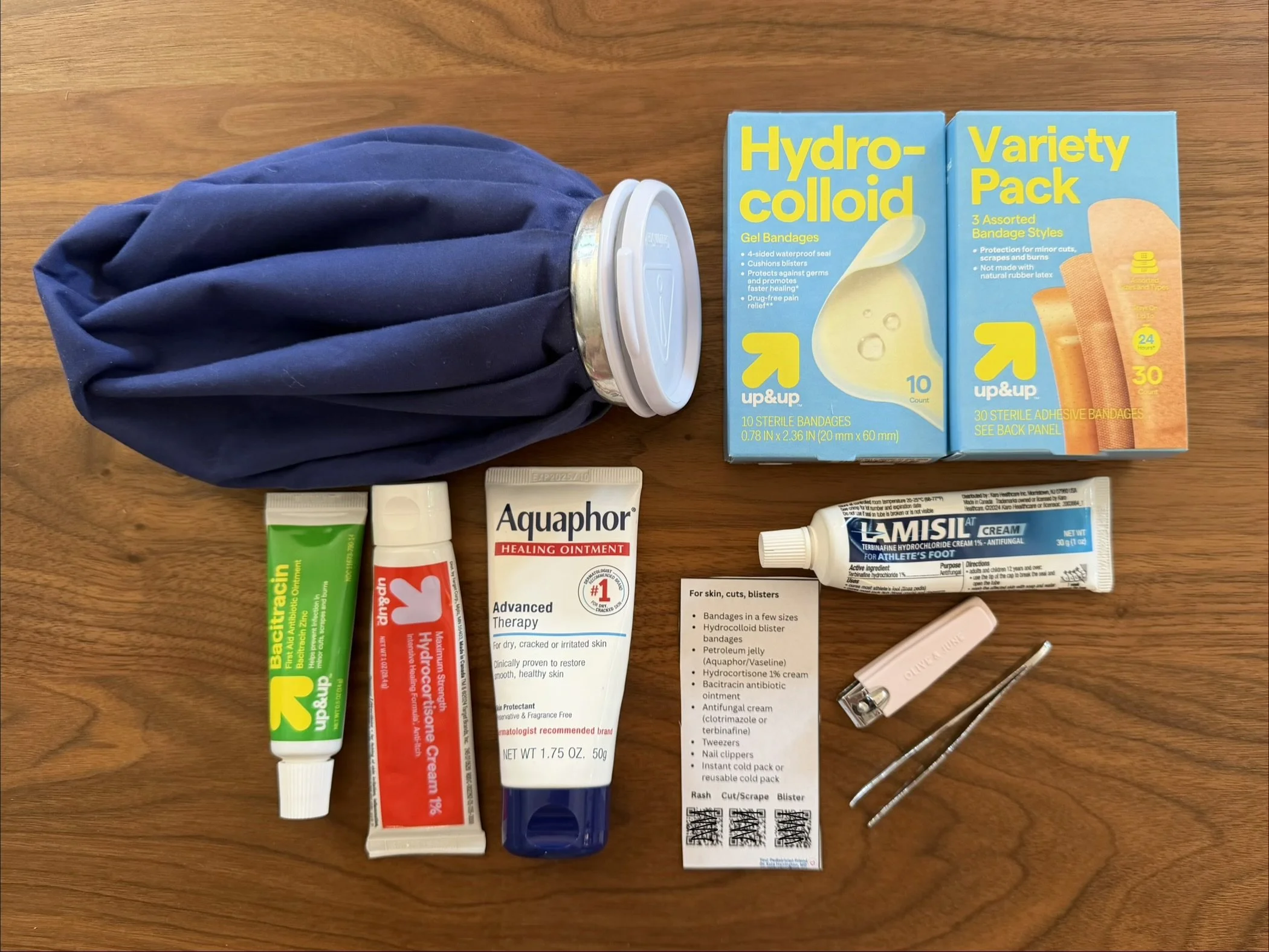
For skin, cuts, and blisters
Between new shoes, campus walking, gym equipment, dorm furniture assembly, and random skin rashes, these supplies will come in handy!
Pack:
Bandages in a few sizes
Petroleum jelly, such as Aquaphor or Vaseline for any cuts, scrapes, or dry/cracked skin
Hydrocortisone 1% cream for itchy rashes or bug bites
Bacitracin antibiotic ointment for mild skin infections
Antifungal cream, such as clotrimazole or terbinafine, for fungal infections like ring worm or athlete’s foot
Tweezers for splinters or ticks
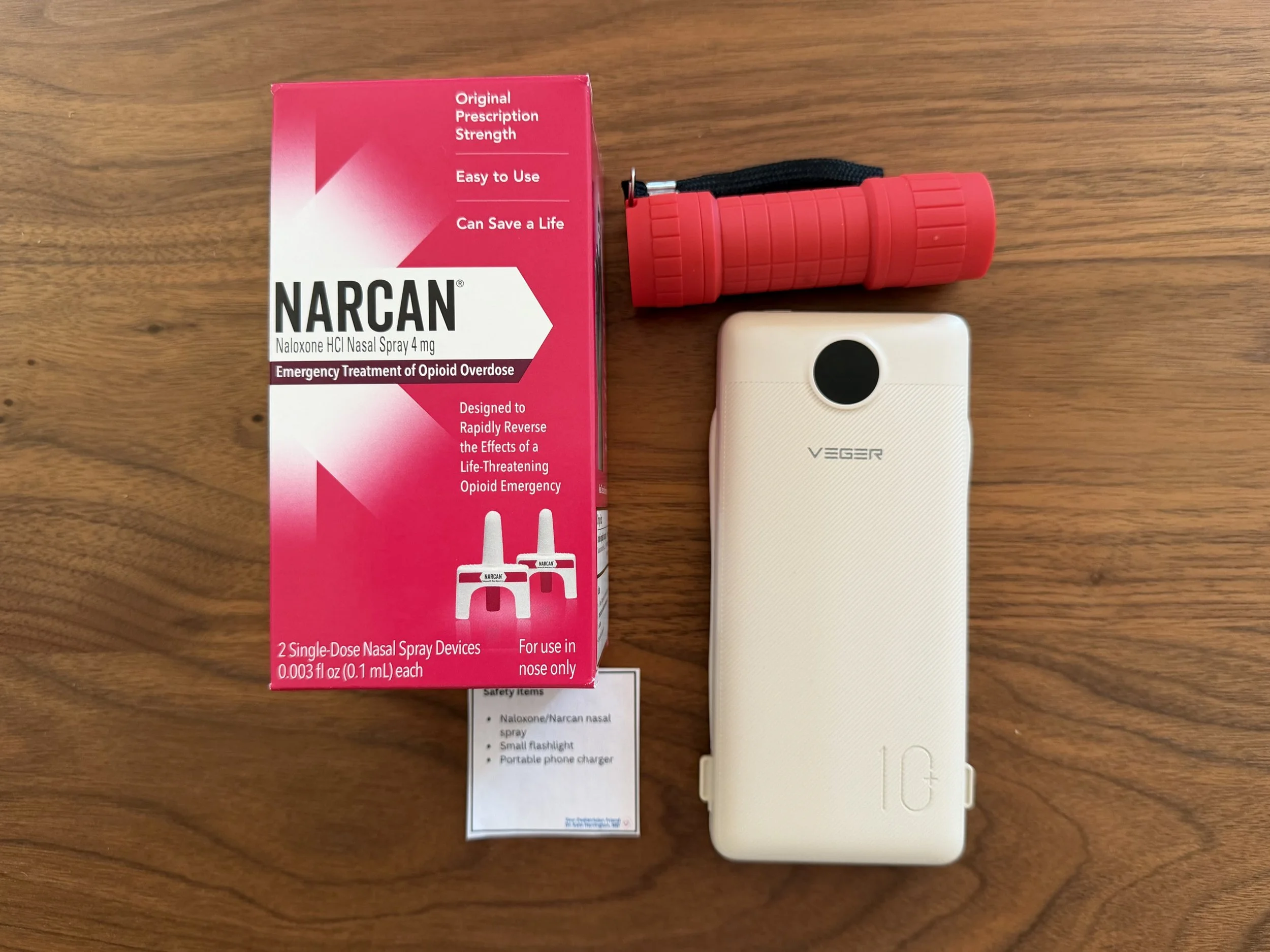
Safety items
A few items that may not need to be used, but it is helpful to have in case of an emergency.
Naloxone/Narcan nasal spray in case of roommate/friend overdose or accidental ingestion
How to organize the medical kit
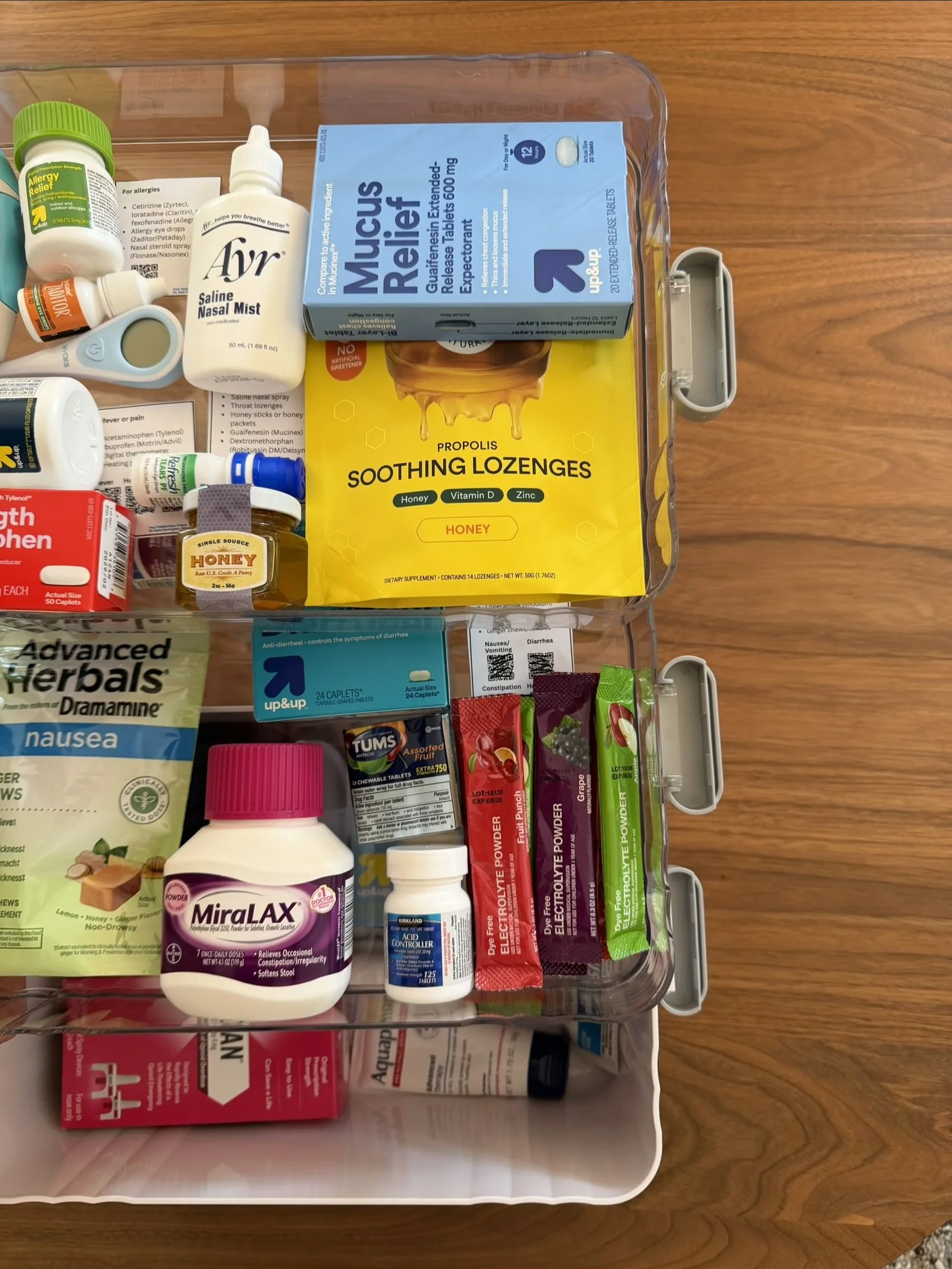
You do not need anything fancy—a simple plastic bin, a tackle box, or a tiered bin would all work.
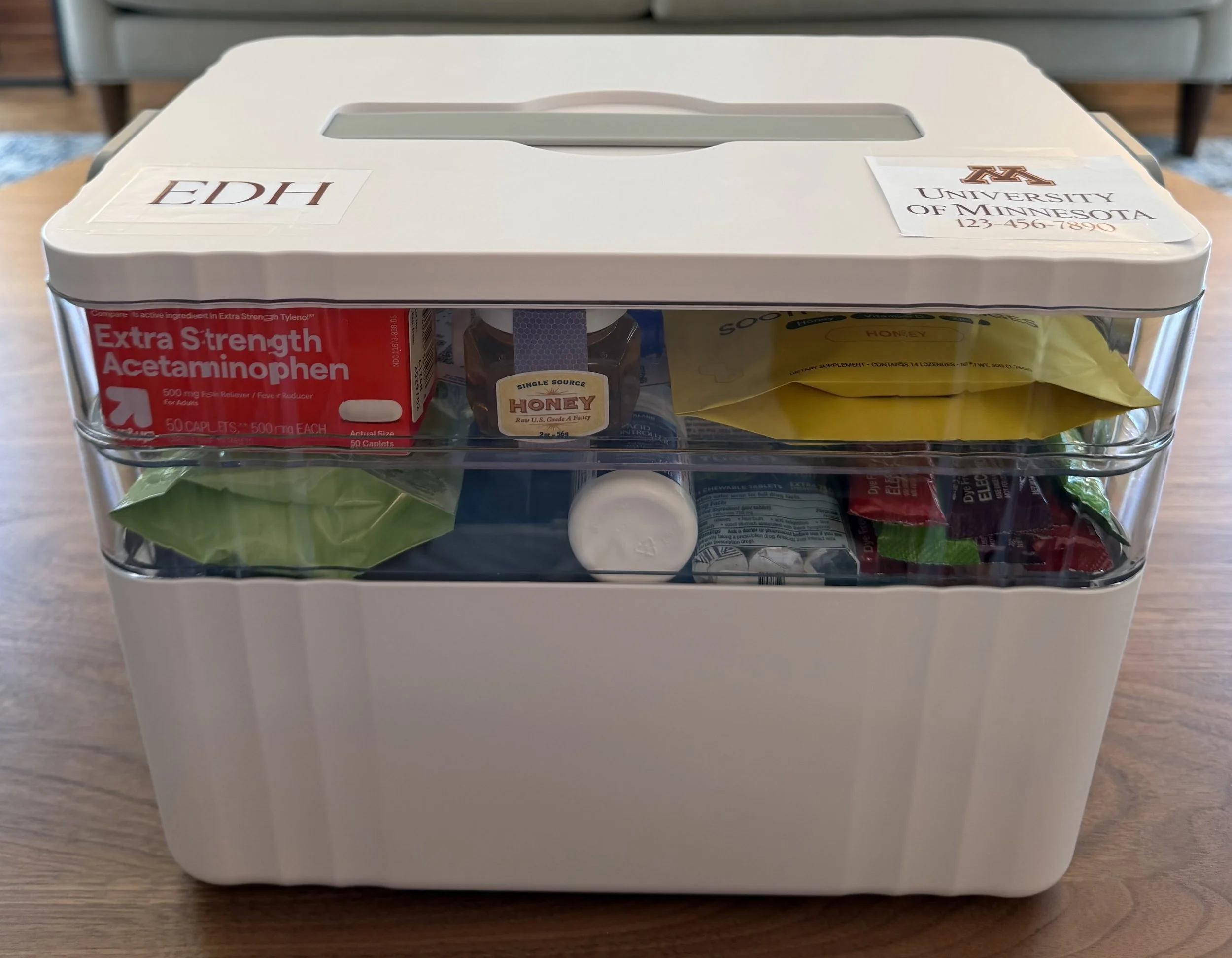
I like organizing items by symptom:
Fever/pain
Cold/cough/congestion/sore throat
Stomach symptoms
Allergies
Skin/cuts/blisters
Safety items
Then put a printed medication sheet in the box so your student knows what each item is for. (To make it easy for you, I have one in my College 101 Health Guide. There is even an option that you can cut out and put in each compartment of the medical kit and has QR codes with links to videos of me explaining what things to do for each symptom, and what symptoms mean you need extra help.)
Helping your child develop independence in managing their health
The medical kit is a great first step to get your child ready for college. Now they have all the gear they will need in case of a health issue!
But it doesn’t answer some of the bigger questions they’ll encounter:
Can I take ibuprofen with my allergy medicine?
Should I go to class if I have a fever?
When do I call student health?
What if I have UTI symptoms?
What if my roommate is really drunk and won’t wake up?
What numbers should I save before I need them?
What legal documents should I have in place to ensure my parents can help in a medical emergency?
That’s why I created College Health 101: What to Take, Who to Call, and When to Get Help.
It is a pediatrician-created guidebook for students leaving home. It includes the medicine kit shopping list, symptom-by-symptom medication guidance, safety plans, emergency numbers, “Can I go to class?” flow chart, prescription planning, insurance basics, legal/practical documents checklist, and printable resources to help families build a health kit at home. I also have QR-code linked videos that help students navigate common symptoms.
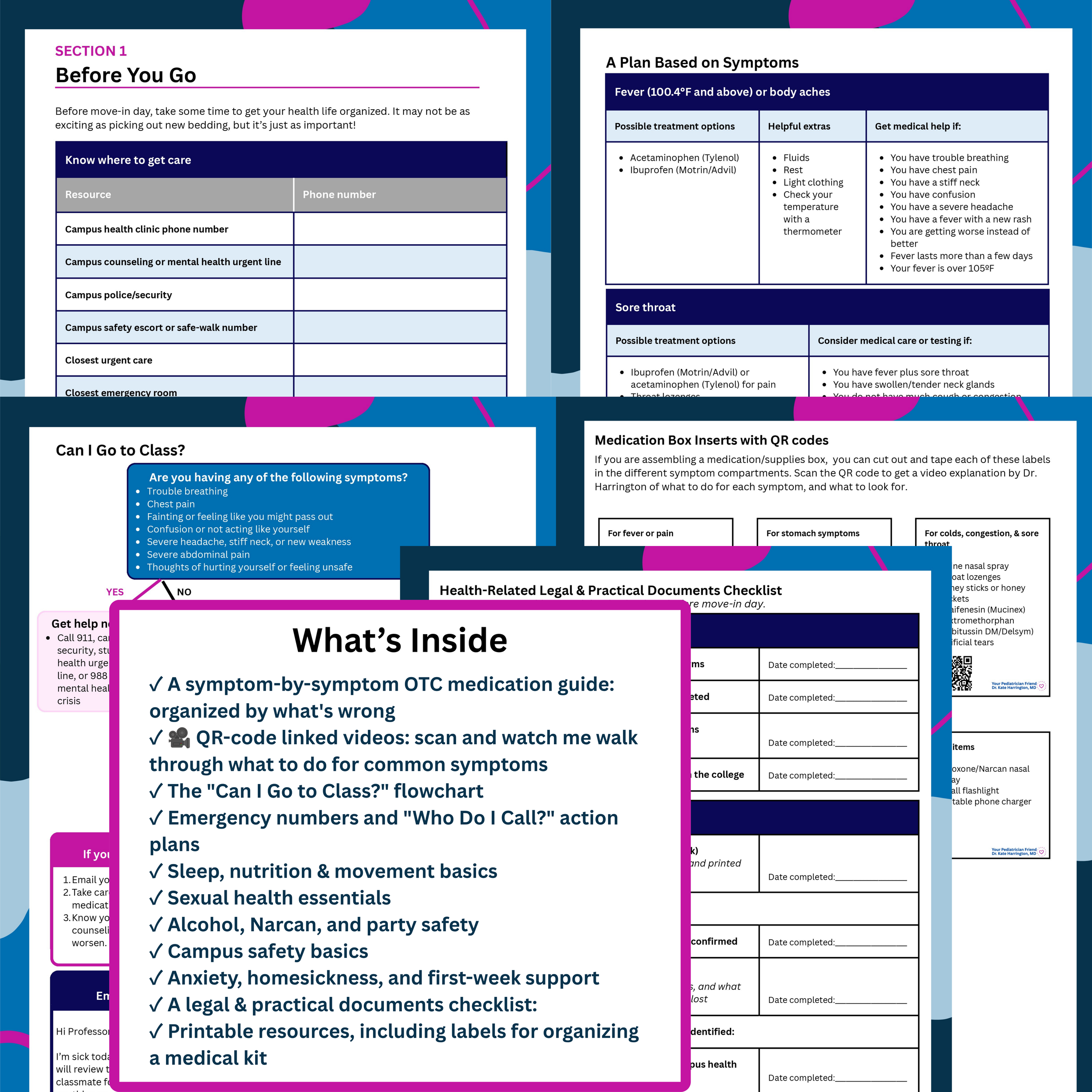
It is written for students, but parents love it because it gives everyone a plan!
Good luck! This is such an exciting time for your child, but it is definitely bittersweet for them to leave the nest. You’ve got this! (And I’m happy to make the transition less worrisome for you all!) 💕