
This is the time of year when parents of infants start to reach out about new mystery rashes. Have you seen any yet? Maybe it’s bright red cheeks, pink bumps on the torso, or dry patches on the arms and legs. So often the culprit is dry skin: cold, dry air and indoor heat can wreak havoc on that baby skin!
So what products are best for keeping that skin healthy? The answer may feel a little counterintuitive. There may be a reason why one of my former partners liked to say “Poison ivy is natural too!” Let me explain!
KEY TAKEAWAYS
Baby skin is like a “leaky wall.” Water escapes more easily and irritants get in more easily, so it dries out and gets irritated faster, especially in a Minnesota winter
“Natural doesn’t mean gentle. Skip fragrance, essential oils, botanicals like lavender and chamomile, and food ingredients like peanut oil.
Ignore the claims on the front of the skin product bottle. The ingredient list tells you what you need to know. Flip the bottle!
Daily baths are fine. Keep them short and lukewarm, use a fragrance-free, soap-free cleanser, and moisturize within a few minutes.
You don’t need much for your baby’s skin care: a gentle cleanser, a thick fragrance-free cream, and a jar of plain petroleum jelly.
A baby’s skin barrier is still developing
Before we get into what products can be most beneficial for infant skin, it is helpful to review what makes infant skin unique. And to start that conversation, let’s talk about the basic structure of skin. Get ready for some science!!
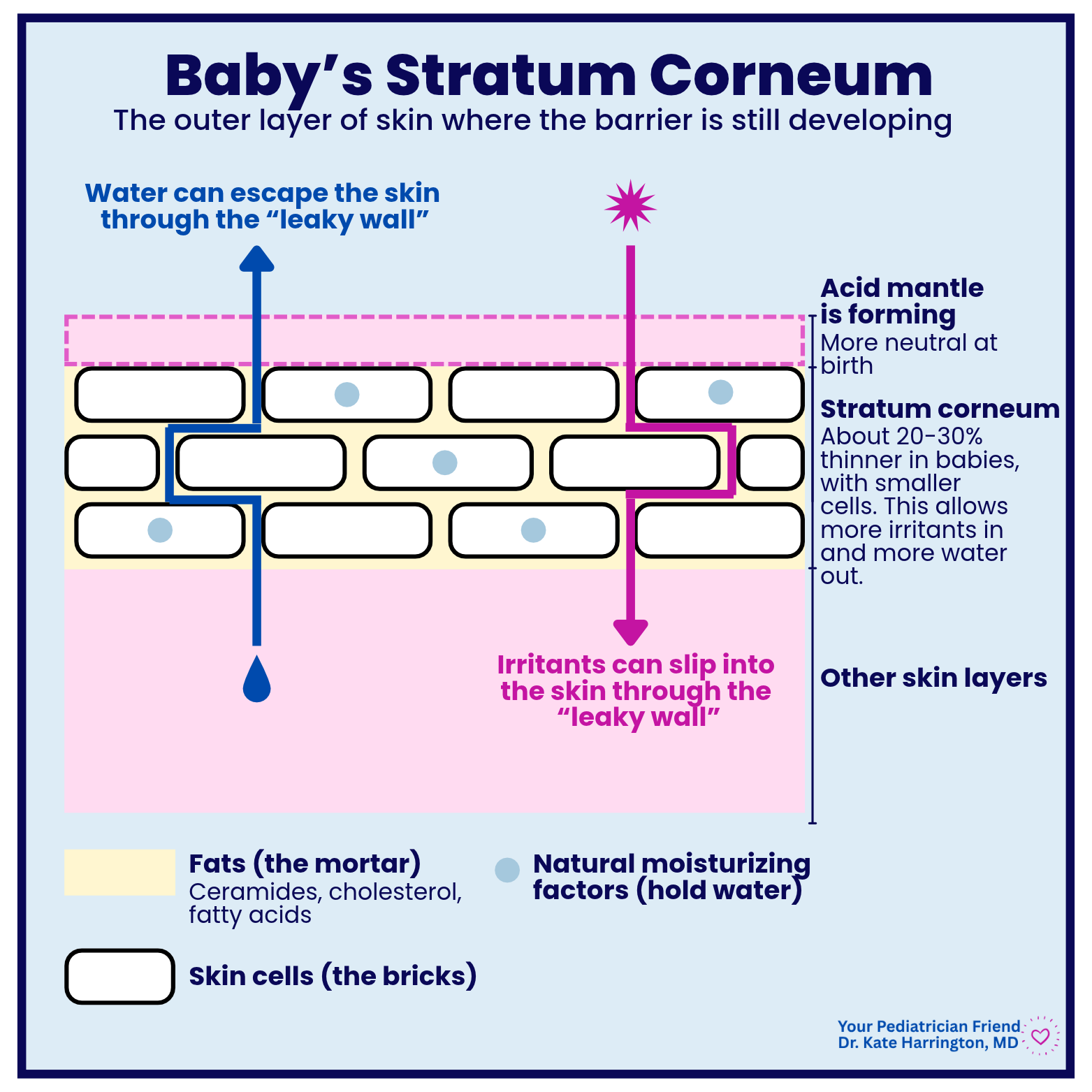
The skin's barrier is located in its very top layer, called the stratum corneum. It's thinner than a sheet of paper, but it does an enormous amount of work.
Dermatologists often describe it as a brick wall. The bricks are flattened skin cells. The mortar holding them together is a blend of fats: ceramides, cholesterol, and fatty acids. Tucked inside the bricks are natural moisturizing factors (NMF), which are small molecules that hold on to water. When the wall is in good shape, water stays in, and most irritants, allergens, and germs stay out.
The skin’s surface is also slightly acidic. This is called the acid mantle, and that mild acidity helps the barrier repair itself and makes it harder for unfriendly bacteria to take over.
A full-term baby is born with a working barrier, but it is still developing.
The outer layer is thinner. A baby's stratum corneum is about 20 to 30% thinner than an adult's, and the skin cells that make up the “bricks” are smaller.
It handles water differently. Baby skin actually holds more water than adult skin, but it also loses water faster.
The acid mantle takes time to develop. At birth, the skin's surface is close to neutral. It becomes more acidic over the first days and reaches a typical acidic level around the end of the first month.
The skin barrier continues to mature. The biggest changes happen in the first year, but complete maturation of some skin-barrier components doesn’t happen until later in childhood.
Many dermatologists describe newborn skin as a two-way leaky wall. Moisture escapes more easily, so baby skin dries out faster than an older child or an adult. And things, like irritants, ingredients from products, allergens, and bacteria, get in more easily, making it more vulnerable to irritation than older skin.
A lot of skin for a small body
A second difference is that babies have a lot of skin for their size. (I mean, how else would they cover all those cute chubby cheeks?)
As a body grows, weight increases much faster than skin surface. So the smaller the person, the more skin they have per pound. A typical newborn weighs about 5% of what an average adult weighs, but has about 13% as much skin. So that's roughly three times as much skin per pound as an adult.
This is important because a larger surface area can lead to more absorption of ingredients placed on the skin. For example, if you apply the same lotion over your baby’s whole body and over your own body, even if the same percentage of the product soaks in, your baby could take in roughly three times as much of it per pound of body weight. Couple this with a thinner barrier and developing liver and kidney function, and small exposures can add up faster in babies than they would in an adult.
What can happen when baby skin gets irritated?
Despite the “leaky wall,” most babies get through their first year with nothing more than a few dry patches. But when that still-developing barrier gets stressed by harsh soap, fragrance, dry winter air, hard water, or a steady stream of drool, a few things can happen.
Dry Skin
Babies lose water through their skin faster than adults do. When water escapes faster than the skin can replace it, the result is dry, rough, flaky skin.
As the skin dries out, the wall itself develops tiny cracks, which lets even more water escape and makes it even more sensitive to irritants, allergens, and germs. So, keeping skin moisturized is an important aspect of infant health.
Irritation from saliva, urine, and stool
Saliva, urine, and stool all wear down the skin barrier when they sit on it. Drool rash on the cheeks and chin and many diaper rashes happen when the skin gets worn down faster than it can repair itself. Harsh soaps and fragranced products can also cause an irritant contact dermatitis.
The basic fix is to gently clean the area and protect it from further irritation. And since every baby has a drool era, a thin layer of plain petroleum jelly around the mouth before feeds and several times throughout the day can help protect those drooly chins and cheeks. And at diaper changes, a barrier ointment applied after gentle cleaning helps prevent diaper rash.
Contact reactions to products
Some ingredients can irritate the skin directly. Others can cause an allergic skin reaction after repeated exposure. These reactions are called contact dermatitis. Fragrance is a common culprit, but metals, plants (poison ivy, poison oak, and poison sumac are extreme examples), latex, dyes, and medications can all lead to allergic contact dermatitis.
This is one reason to keep baby skin care simple, especially if your baby has eczema or irritated skin.
Eczema and food allergies
Eczema is an inflammatory skin condition that involves a “leaky” skin barrier. In some children, genetic differences (such as changes affecting a protein called filaggrin) can contribute. Filaggrin helps organize the skin cells, and as it breaks down it produces some of the molecules that help skin hold water and maintain its slightly acidic surface.
Eczema and food allergies often occur together. One proposed explanation is the dual-allergen exposure hypothesis. The idea behind this is that a baby's body learns to accept a food when it's eaten and digested through the intestine. But when tiny amounts of food protein get in through broken, inflamed skin before the baby has eaten that food, the immune system may learn to treat it as a threat instead.
Human studies support a connection between early skin-barrier problems and later food sensitization and allergy, but they don’t show that a skin problem alone causes a food allergy. And most babies with dry skin won’t develop a food allergy!
This research is a big part of why advice has flipped toward introducing allergenic foods early, by mouth. It's also a good reason to be cautious about food ingredients like peanut oil, oat, and goat milk in baby skin care, especially for babies with eczema.
What does this all mean?
It means maintaining a healthy skin barrier in the first year of life can have long-lasting effects on future health. And the best way to protect the barrier is to keep irritating ingredients off the skin, and keep moisture in.
So What Can You Do?
Keep irritants off the skin
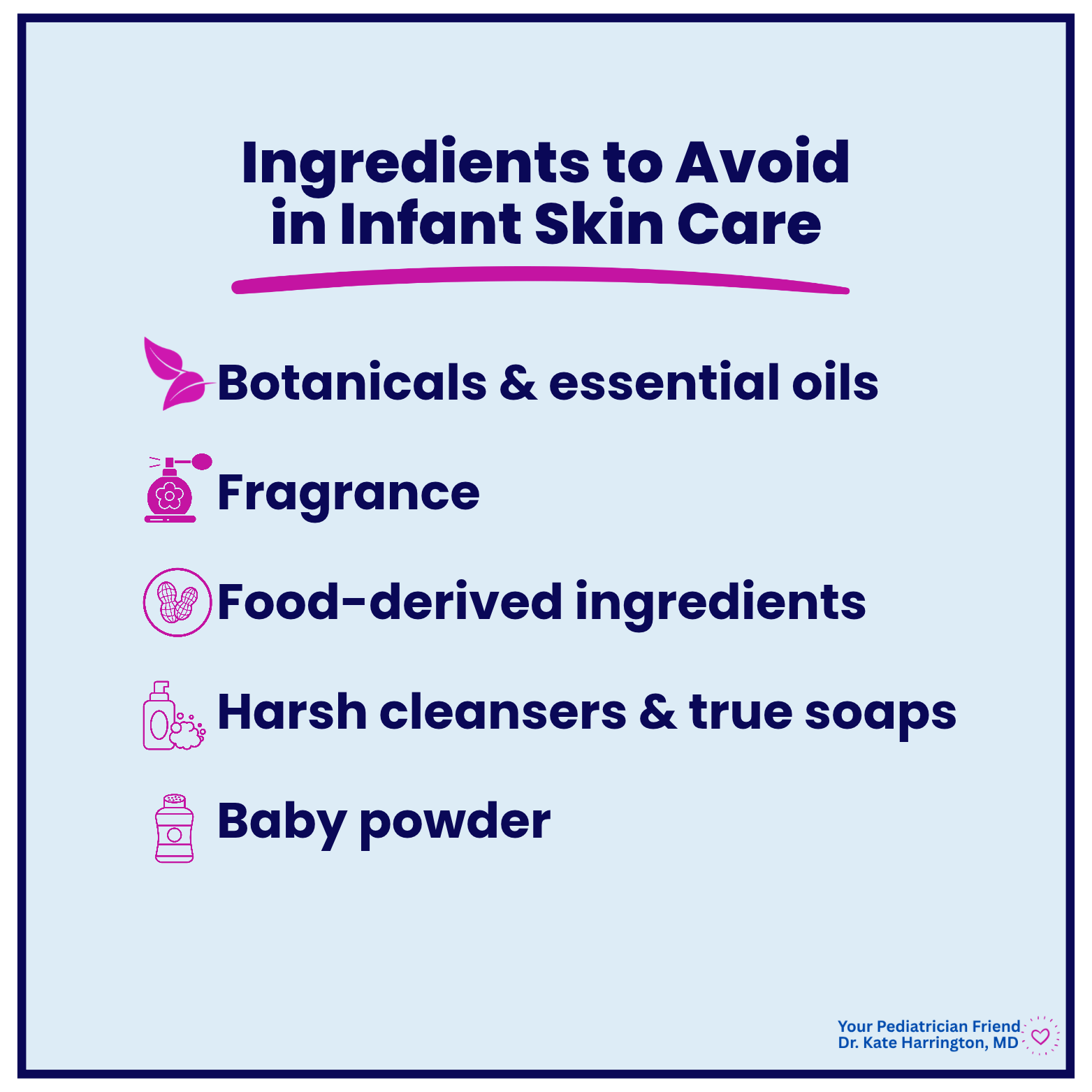
1. Botanicals and essential oils
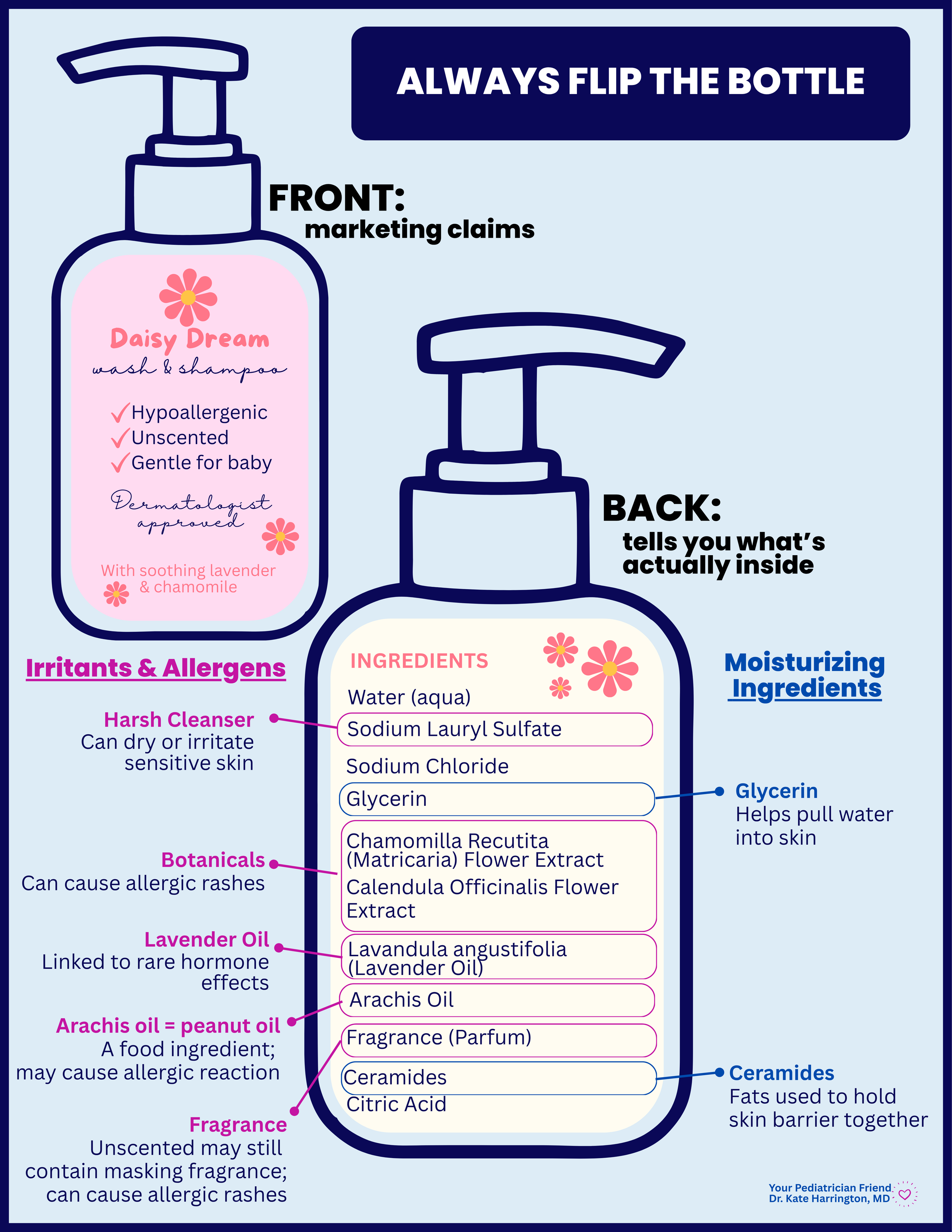
Look for: lavender, tea tree, chamomile, calendula, arnica, and anything listed as an "oil" or "extract" of a flower or herb.
Many parents feel like products with botanical components are “natural,” and assume they will be a gentle choice. Have you ever seen a baby gift basket without some kind of lavender product? However, many plants can be irritating to a baby’s maturing skin (remember poison ivy?!?) or cause allergic contact dermatitis. Chamomile, calendula, and arnica (all belonging to daisy family) are often touted as calming ingredients on packaging, but they can trigger skin allergies, especially in those with eczema.
A handful of case reports have linked regular use of lavender and tea tree oils to early breast development in young children, which went away after the products were stopped. It's rare, and the evidence is limited. But since these oils are usually added for scent, I don’t see a reason to use them in a baby.
2. Fragrance
Look for: fragrance, parfum, aroma, or products described as scented, including "baby powder scent.”
Fragrance is one of the more common causes of allergic skin reactions in children. Even “natural fragrance” and essential oils can be irritating.
Choose fragrance-free products. “Unscented” isn’t always the same thing: a product may contain masking fragrance to cover the smell of other ingredients. So, check the ingredient list, even if the front label says “unscented.”
3. Food-derived ingredients
Look for: peanut oil (often listed as arachis oil) and other nut or seed oils, goat milk, oat (colloidal oatmeal or Avena sativa), wheat, soy.
This matters most if your baby has eczema or broken skin. Oat is confusing: some studies link oat creams to oat sensitization in kids with eczema, while others show oat moisturizers help. If your baby has eczema, ask your pediatrician or allergist about the safety of using products with food-derived ingredients.
4. Harsh cleansers and true soaps
Look for: sodium lauryl sulfate (SLS) and traditional soaps made with ingredients such as sodium tallowate, sodium cocoate, sodium palmate, or saponified oils.
SLS disrupts the skin barrier and can be drying or irritating to sensitive skin.
Healthy skin is slightly acidic, and traditional soaps (including castile, goat milk, and many glycerin bars) can be alkaline and can disrupt the pH balance of the acid mantle. So, look for a mild, soap-free, fragrance-free cleanser instead. Dermatologists often call these syndets (short for synthetic detergents). They tend to be less drying than traditional soap.
5. Baby powder
Babies don’t need powder. Talc and cornstarch can irritate a baby’s airways if breathed in. Skip both!
Keep moisture in skin
These ingredients can help moisturize or protect the skin barrier:
Glycerin draws water into the outer layer of skin.
Petrolatum (petroleum jelly) seals moisture in. It's one of the most protective, least irritating options for many babies.
Ceramides are fats your skin naturally uses to help hold its barrier together.
Dimethicone forms a light protective layer on the skin.
In general, a thicker moisturizer is better when skin is very dry. So ointments and creams usually protect more than lotions, which contain more water and feel lighter.
Regular bathing and moisturizing
Bathe as often as it works for your family. You may have heard that frequent baths dry out a baby's skin. But baths can be soothing, can help with fussiness, and can wash off the saliva, urine and stool that can irritate a baby’s skin. So, daily bathing is fine.
But a few practical points can help keep skin healthy:
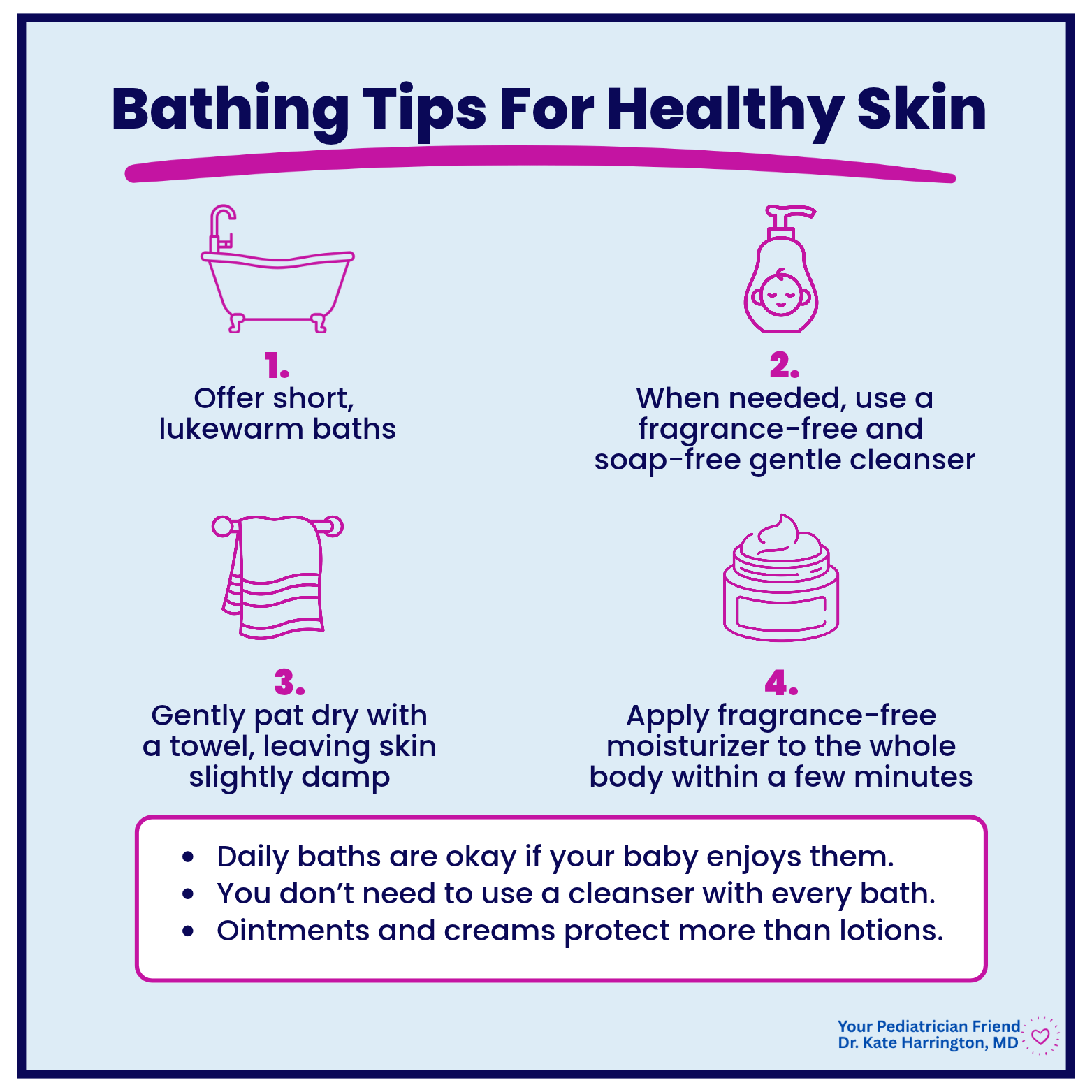
Give a short, lukewarm bath. Hot water and long soaks pull more moisture out.
You don’t need to use a cleanser every bath. Warm water does a lot of the work.
When you use one, choose a fragrance-free and soap-free cleanser.
Pat gently with a towel, leaving the skin a little damp.
Apply moisturizer within a few minutes, all over.
The bath adds water to the outer layer of skin, while the moisturizer helps slow down the water loss.
Cleansers I like
I like any cleanser that is fragrance-free and soap free. Here are a few examples.
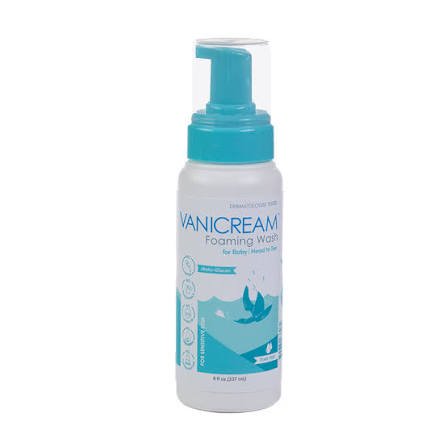
Works on hair and body. Free of fragrance, botanicals, essential oils, and soap.
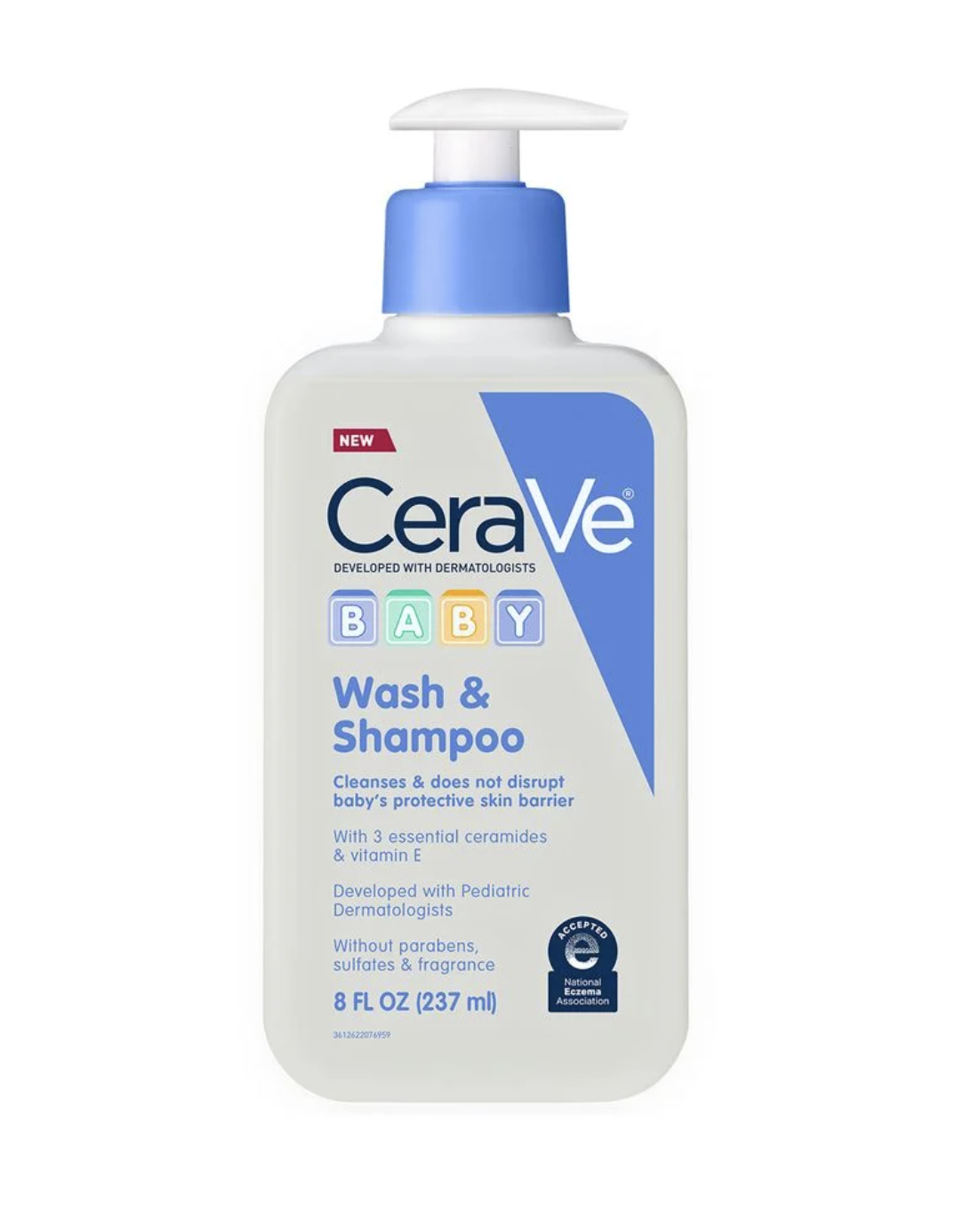
Fragrance-free and sulfate-free, with ceramides. Carries the National Eczema Association Seal.
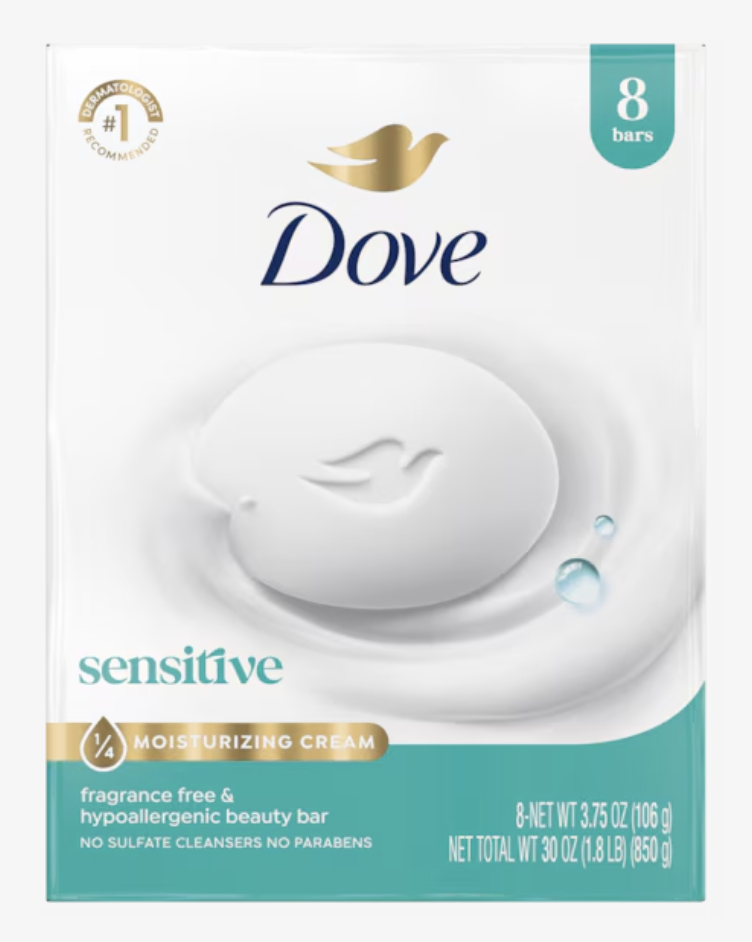
A syndet bar, not a true soap, at a neutral pH. The sensitive version is fragrance-free.
Moisturizers I like
Thick moisturizers, like ointments or creams, tend to protect more than lotions. As is the case for all baby skin products, look for fragrance-free options.
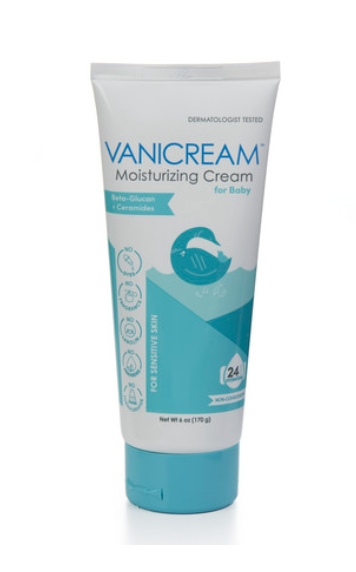
Free of fragrance, lanolin, botanicals, and essential oils. Good for everyday, all-over use.
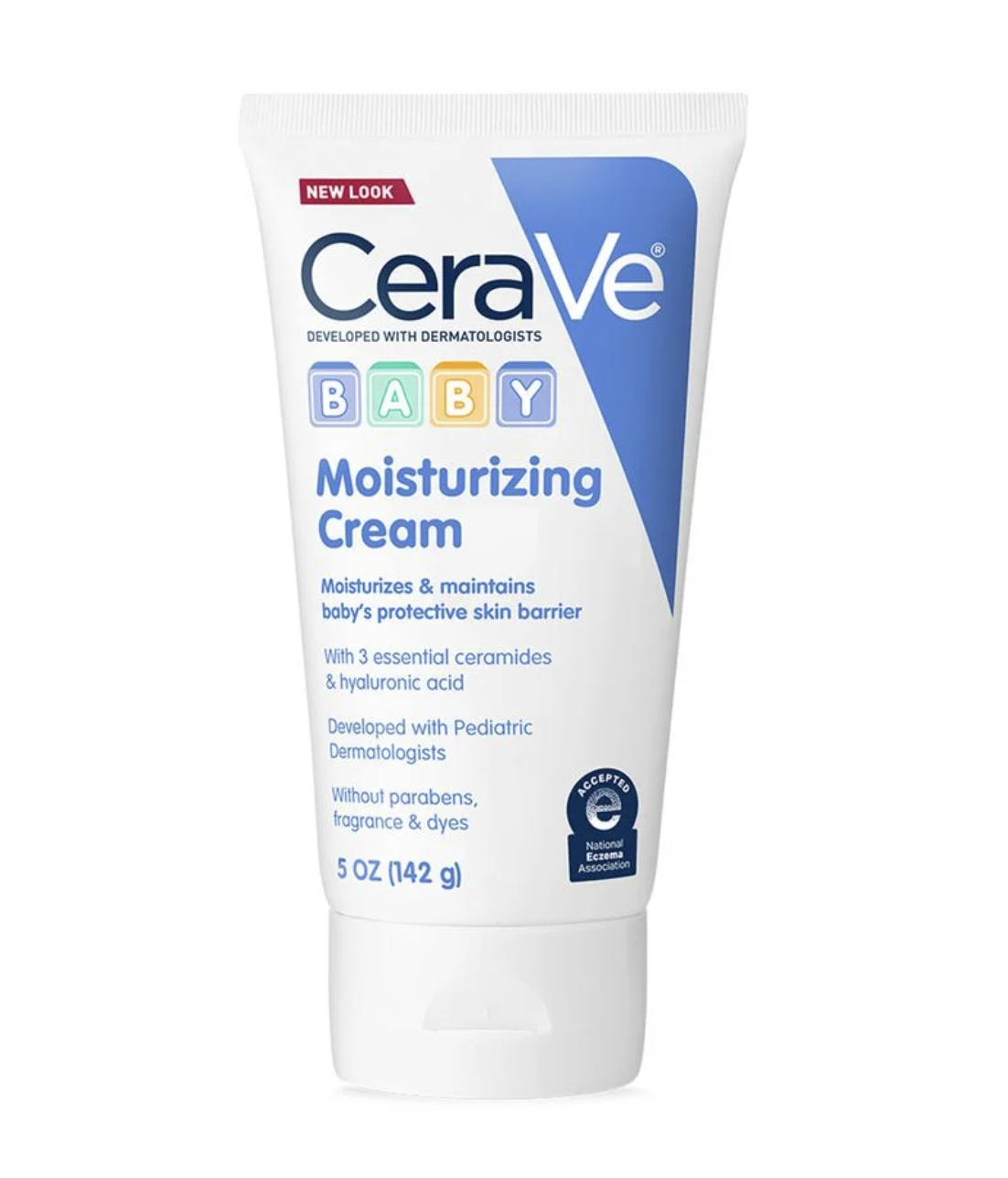
Fragrance-free, with ceramides. Good for everyday use. Carries the National Eczema Association Seal.
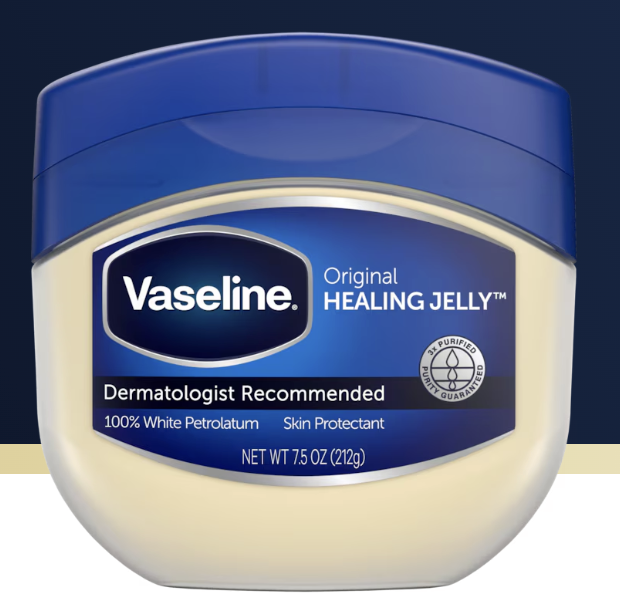
Great for drool cheeks, chapped spots, and very dry patches. Buy the original, not the “baby” version.
If a product seems to make your baby’s skin worse, stop using it and try something simpler. If your baby has persistent or inflamed eczema, the moisturizer may help with dryness but may not be enough to treat the inflammation—check in with your pediatrician to discuss possible need for topical steroids.
🩺 Pediatrician’s Insight: Some products contain a seal of acceptance by National Eczema Association meaning that the product’s formula is free from known irritants, allergens, chemical UV absorbers, formaldehyde releasers, harsh surfactants, and other restricted ingredients. All products must also be completely fragrance-free with no added scents. If your child has eczema, their website has a Eczema-Friendly Product Directory that can be very helpful.
🩺 Fun Fact: Many baby skin products are just the same as the adult version, with different marketing. Often they are even cheaper. Compare labels to confirm for specific brands, paying close attention to any added “baby” fragrances.
Don’t be fooled by the front of the bottle
"Natural." "Organic." "Hypoallergenic." "Dermatologist approved." "For baby."
You will see these claims written all over skin products marketed for babies. But, they are just marketing and don’t really tell you anything about how the product may affect your baby’s skin. You should always flip the bottle over and look at the ingredient list.
Two label tips to remember:
"Unscented" does not always mean fragrance-free. An unscented product can still contain a masking fragrance, added to cover up the smell of other ingredients. Look for "fragrance-free" and double-check the ingredient list.
"Baby" doesn’t mean gentler. Baby products can still contain fragrance, essential oils, botanicals, or other ingredients that may irritate sensitive skin.
The ingredient list is more important than any claim on the front of the bottle!
Getting ready for Minnesota winter
Forced-air heat plus cold, dry outdoor air means most Minnesota babies have dry skin by December. Start a healthy routine now, before issues show up:
Moisturize at least daily, especially after bathing. If lotion isn’t keeping up, switch to a thicker cream.
Run a cool-mist humidifier in the nursery, and clean it as the manufacturer directs.
Be sure your water softener is working properly. Hard water may leave more cleanser residue on skin, and studies have found an association between living in a hard-water area and eczema.
Use fragrance-free laundry detergent and skip dryer sheets. Your baby's clothes and sheets touch their skin all day.
Protect cheeks before going out. A thin layer of plain petroleum jelly helps against wind and drool.
Dress your baby in soft layers. Overheating and sweat can make itchy skin worse.
If a rash is spreading, looks infected, is bothering your baby, or isn’t improving with gentle skin care, check in with your pediatrician.
Walking down the baby aisle can feel overwhelming. But you don't need a cabinet full of products. A gentle cleanser, a good cream, and a jar of plain petroleum jelly will be enough for just about every baby. And if a “natural” bottle full of botanicals starts calling your name, just hear my old partner in your head: “Poison ivy is natural too!”

This post contains affiliate links, which means I may earn a small commission if you purchase through my links, at no extra cost to you. I only share items I think are useful for families.